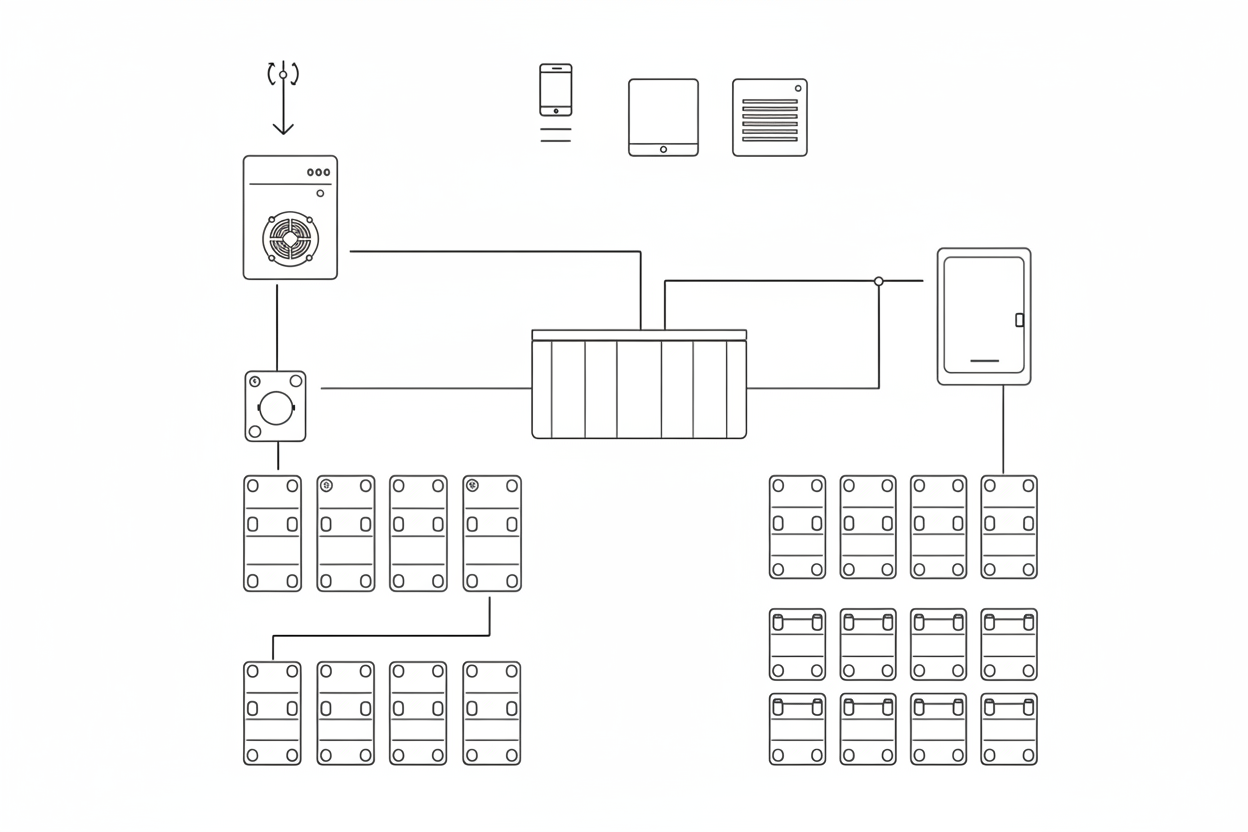
Nowadays, the demand for stationary energy storage systems is rapidly increasing. As their demand increases, Lithium Iron Phosphate (LiFePO4) batteries are gaining popularity because of their safety, thermal stability, and long life cycle when compared to other lithium chemistries. Even though LiFePO4 has greater safety and thermal stability, along with these LiFePO4-based energy storage systems also depend on the design packing of the cell batteries, and also depend on the Battery Management System (BMS).
The BMS’s responsibility is to ensure the safe operation of LiFePO4 battery packs by implementing various protection protocols, such as electrical isolation and insulation, thermal protection, and mechanical protection. In this blog, we will explore how BMS ensures the required safety for energy storage systems.
Protection Based on Different Battery Packing Designs:
Cylindrical Cell Packs:
One of the most commonly used energy storage systems is Cylindrical Cells, because of their durability and ease of assembly into large packs.
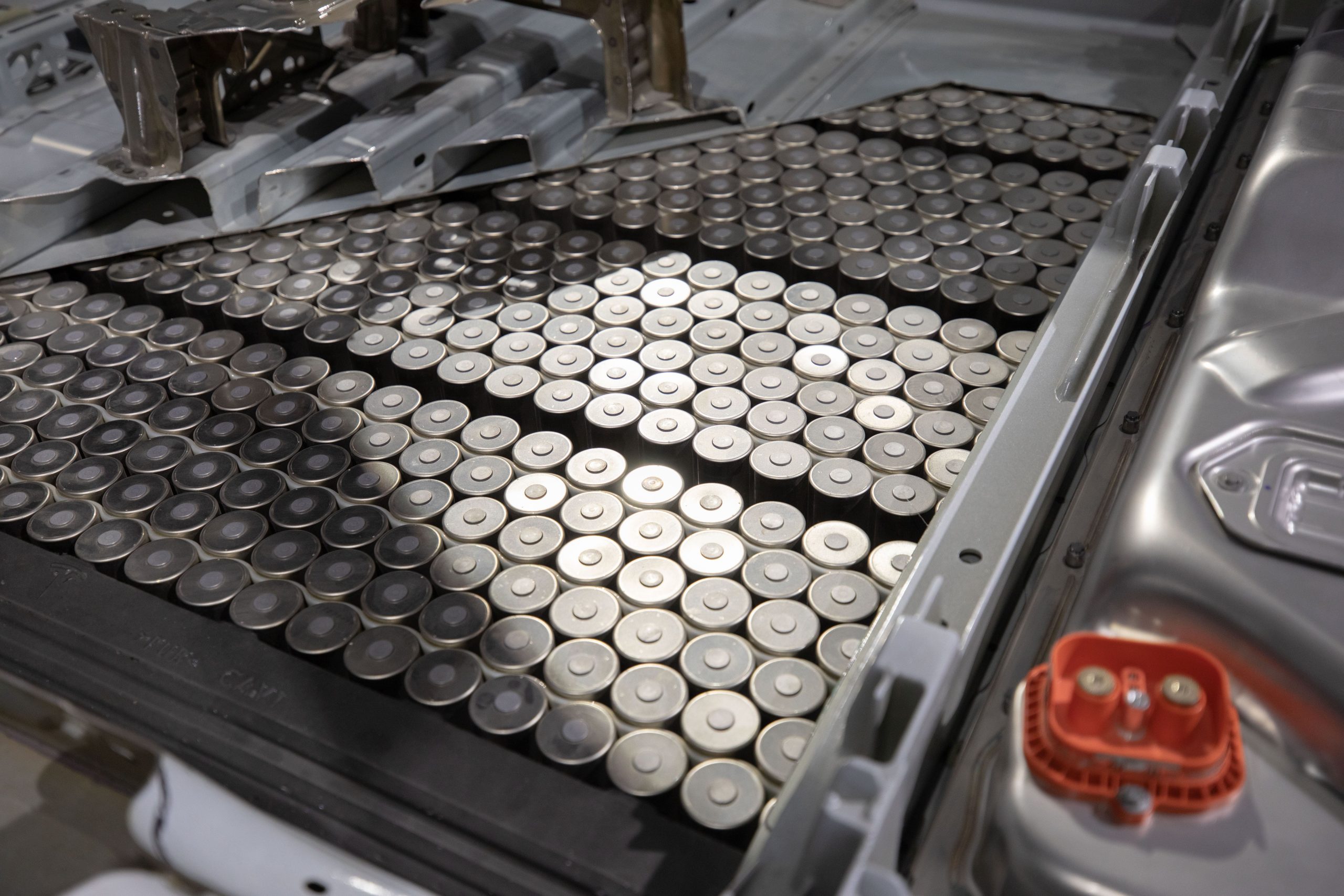
To prevent the hot spots in the battery pack, cooling channels need to be implemented between the rows of the cylindrical cells which ensures the uniform distribution of the temperature in the battery pack. Also, consistent insulation cell terminals are required to prevent short circuits and ensure safe operation. The use of grid enclosures which are combined with the shock-absorbing materials helps in protecting the battery and cells from the external vibrations and impacts.
Prismatic Cell Packs:
Prismatic cells are rectangular shape and typically enclosed in stainless steel or hard aluminum casings. Whenever high energy density and optimal space utilization are required prismatic cell packs are preferred.
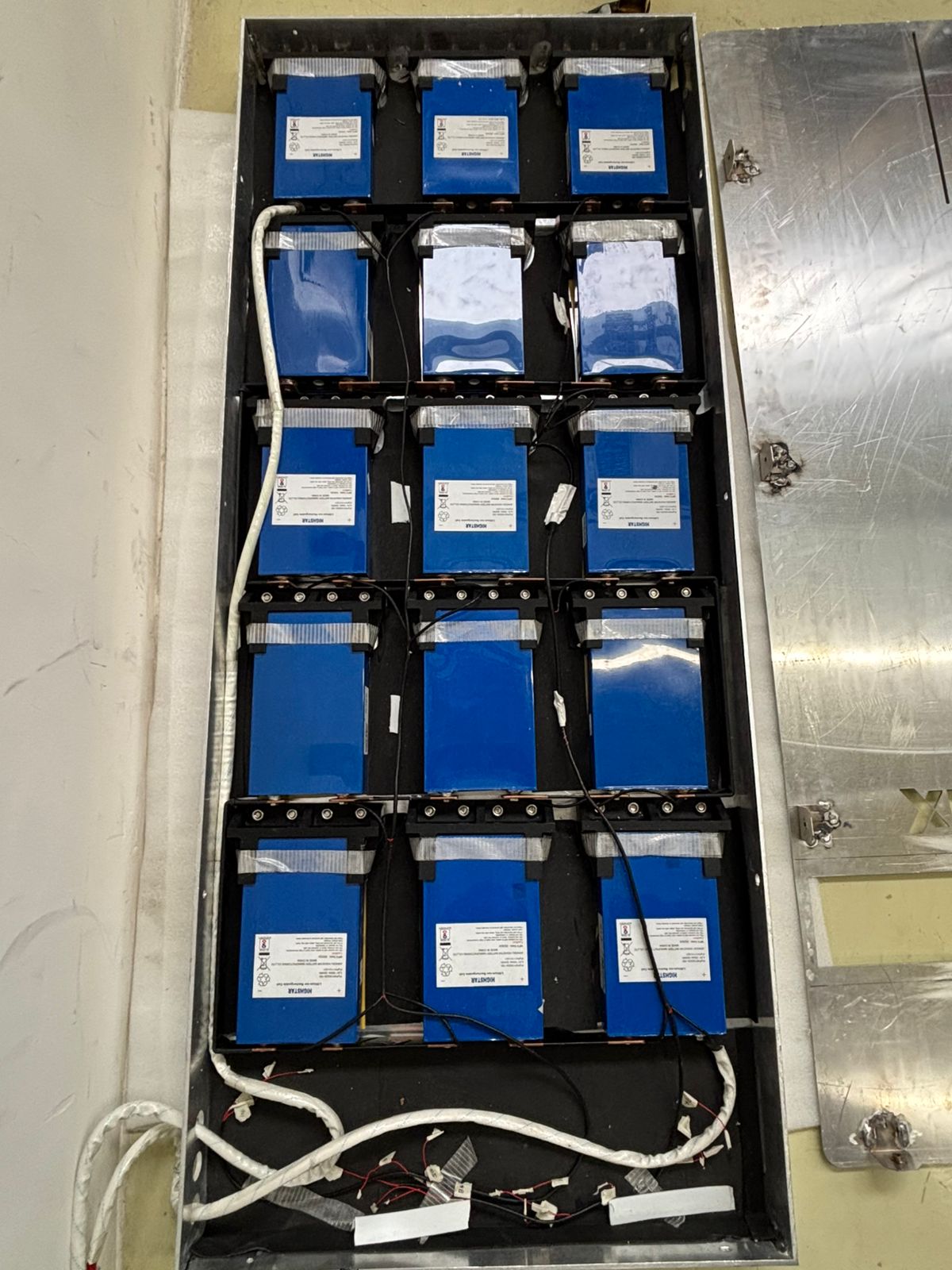
External frames should be incorporated to maintain the structural integrity of the prismatic cell packs, especially if they are involved in thermal expansion. Distributed thermal sensors can be used to monitor the temperature fluctuations within the battery pack, which helps ensure proper heat management. We need to take care of the insulation at the terminal connections to prevent electrical shorts and enhance overall safety.
Pouch Cell Packs:
Among the other pack designs, pouch cells are lightweight and compact. Whenever there is a demand for high energy density in a small form factor, we can go for this design.

While designing the battery pack it is important to maintain uniform pressure across all the cells to avoid issues like delamination, which can lead to the compromised performance of the entire system. We can use the phase change materials (PCMs) as the thermal barriers which will regulate the heat dissipation, ensuring thermal stability. We can give mechanical protection to the pouch pack designs by minimizing stress and punctures to protect the delicate pouch cells from physical damage.
Up to now, we have discussed different cell design packs, now let’s explore Thermal protection, electrical insulation, isolation, mechanical protection, and surge protection in particular to LiFePO4-based energy storage systems.
Battery Management System (BMS) plays a crucial role in providing all the protections mentioned above.
Thermal Protection in LiFePO4 - Based Energy Storage System:
Even though LiFePO4 batteries are more stable when compared to other lithium ion-based batteries, these batteries can still experience thermal runaway because of overcharging, overcurrent, or short circuits. The life cycle and battery performance are degraded if the temperature of the energy storage system increases.
Do You Know How BMS Ensures Thermal Protection?
Temperature Monitoring: when designing the battery pack, sensors are placed at various points in the battery pack. Generally, we use thermistors to continuously monitor the battery temperature.
Active Cooling Control: Whenever the temperature of the battery pack exceeds the predefined temperature or limits the BMS can trigger the cooling mechanisms like fans, liquid cooling, or phase change materials.
Thermal Cutoff: if the temperature of the battery pack rises beyond a critical threshold, the Battery Management System (BMS) disconnects the battery from the load to prevent overheating in the battery pack which may lead to a fire.
Example: Let’s assume we have a battery pack and it is getting charged. While charging if the battery pack reaches 55°C, the BMS may reduce the charging current or activate the cooling fans to avoid overheating. If the battery module reaches 65°C, the BMS might disconnect the battery pack entirely.
# Check for overtemperature and undertemperature faults
    if (params->bjbTemperature > MAX_TEMPERATURE):
        protection_status.overTempFault = True
        eventData.eventType = EVENT_OVERTEMP
        eventData.temperature = params->bjbTemperature
        if eventCallback:
            eventCallback(eventData)
    elif (params->bjbTemperature < MIN_TEMPERATURE):
        protection_status.underTempFault = True
        eventData.eventType = EVENT_UNDERTEMP
        eventData.temperature = params->bjbTemperature
        if eventCallback:
            eventCallback(eventData)
Electrical Isolation in LiFePO4-based Energy Storage System:
In high-voltage energy storage systems, electrical faults can lead to leakage currents, ground faults, and safety hazards. To ensure safe operation and prevent accidental shocks or short circuits electrical isolation is required.
How BMS Ensures Electrical Isolation?
A relay is an electronically controlled switch that opens or closes a circuit when it is triggered by the signal from the Battery Management System. A contactor a is high-power relay that is specifically designed for switching large currents in the high voltage applications. These relays or contactors are connected to the external load such as an inverter and battery pack.
These relays or contactors are used by the BMS to isolate the battery pack from the external invertor or circuits during the faults.
Example: If the isolation fault like a ground fault is detected by the BMS, The BMS automatically disconnects the battery pack from the external inverter by using the isolation relay.
if (!is_critical_event_received) {
    bms_open_contactor(MAIN_CONTACTOR_TYPE);
    bms_open_contactor(CHARGER_CONTACTOR_TYPE);
    is_main_contactor_enable = 0;
    is_charger_contactor_enable = 0;
    is_critical_event_received = 1;
}
Electrical Insulation in LiFePO4-based Energy Storage System:
If there is a chance of a short circuit between the battery module and metal casings, to prevent it Electrical Insulation is very important. Electrical Insulation is very essential in high-voltage battery packs like LiFePO4.
How Does BMS Ensure Electrical Insulation?
To prevent electrical contact the battery modules are wrapped in insulating materials like high-quality polymer coatings, ceramic barriers, and mica sheets. Periodic insulation checks are performed by the BMS. The risk of an internal short circuit is reduced by using the proper PCB layout and insulated busbars.
Example: If a high voltage LiFePO4 battery pack (50V) has a breakdown in insulation, the BMS alerts the user and shuts down the system.
Mechanical Protection in LiFePO4-based Energy Storage System:
The LiFePO4 battery packs that are used in outdoor, industrial, and high-performance storage applications are exposed to harsh environmental conditions. If proper mechanical protection is not provided, the battery system can loosen the electrical connections, damage the battery cells, and lead to premature failure.
Physical damage like dents or punctures in battery cells can result in internal short circuits, which can lead to thermal runaway and fire hazards.
So to ensure safety, the BMS and battery pack designs use multiple protection strategies.
How Does BMS and Design Ensure Mechanical Protection?
Rugged Enclosures: Battery packs are housed in specially designed IP-rated enclosures to protect against water, and dust. IP means Ingress Protection. Generally, we use 2 kinds of Ips. They are IP65 which is dust-tight and resistant to low-pressure water jets, and IP67 which is fully dust-tight and waterproof up to 1 meter immersion.
Eg: A stationary LiFePO4 battery for an off-grid solar storage system is enclosed in an IP67-rated aluminum housing. This enclosure prevents water ingress during heavy rains and keeps out the dust that causes short circuits in the battery pack.
Shock and Vibration Resistance: Industrial and mobile applications like telecom towers, remote energy storage systems, and EV battery packs experience mechanical stress due to continuous vibration and occasional impacts.
To avoid this, batteries are held together using mechanically interlocked frames to prevent movement during transportation or operation.
Surge Protection in LiFePO4-based Energy Storage System:
Why Surge Protection Required?
LiFePO4 energy storage systems are connected to solar inverters, high power grids, and industrial loads. These connections expose the system to voltage surges, because of the lightning strikes, grid disturbances, and load transients.
If proper surge protection is not given to the system, voltage spikes can
1. Damage the battery cells by exceeding their voltage limits, leading to overvoltage, capacity loss, or even thermal runaway.
2. Destroy sensitive BMS circuits, including voltage regulators, communication modules, and even microcontrollers.
To avoid these risks, BMS and system design incorporate multiple layers of surge protection.
How do BMS and System Design provide surge protection?
1. Metal Oxide Varistors (MOVs) and TVS(Transient Voltage Suppression) Diodes:
1. MOVs normally have high resistance, but when a high voltage spike occurs, their resistance gradually drops, absorbing energy and protecting downstream circuits. It is commonly used in battery terminals, BMS inputs, and power lines to handle sudden transient surges.
2. TVS Diodes respond within nanoseconds to voltage spikes, clamping excessive voltage before it can damage the sensitive electronics. It is used in BMS communication lines (CAN, UART, SPI) and power rails to protect against electrical transients.
2. Fuse Protection: In high voltage LiFePO4 battery storage system, DC-rated fuses are placed in series with the battery pack to isolate faults. The BMS continuously monitors the voltage. If an overvoltage condition is detected, the system triggers a circuit breaker to disconnect the battery pack from the load.
3. Surge Protection Devices (SPD): Surge Protection Devices are specialized components that protect the entire energy storage system by redirecting the voltage spikes safely to the ground.
These SPDs are installed at AC/DC inverters to handle grid disturbances, and at power distribution panels to protect battery connections and BMS circuits.
E.g.: In a 5kW LiFePO4 battery storage system connected to a solar inverter,
1. type 1 SPD is installed at the DC main AC input to handle lightning-induced surges.
2. Type 2 SPD is installed at the DC side (between the battery pack and the inverter) to suppress switching transients.
Understanding Overvoltage in LiFePO4-Based Battery Energy Storage System (BESS)
Overvoltage occurs when a battery cell or pack exceeds its maximum voltage rating. In LiFePO4 batteries, the safe operating voltage is as follows.
1. Nominal Voltage: 3.2V per cell
2. Minimum Voltage: 2.70V per cell
3. Maximum Voltage: 3.55V per cell
4. Overvoltage Condition: Above 3.55V per cell
Do You Know Why Overvoltage Occurs?
The common causes of overvoltage include:
1. Overcharging: Charging beyond the recommended voltage due to improper charger settings.
2. Cell Imbalance: Some cells in a series pack reach full charge earlier than others.
3. Faulty Charging Circuit: Malfunctions in the charger or power supply.
How BMS Manages Overvoltage?
A BMS ensures overvoltage protection through the following mechanisms:
1. Voltage Monitoring and Cutoff Protection
The BMS continuously measures cell voltages using high-precision voltage sensors.
If any cell exceeds 3.65V, the BMS disconnects the charging circuit by opening a relay switch.
// Check pack overvoltage and undervoltage
if (params->packVoltage > MAX_PACK_VOLTAGE) {
    protection_status.packOvervoltageFault = true;
    eventData.eventType = EVENT_PACK_OVERVOLTAGE;
    eventData.voltage = params->packVoltage;
    if (eventCallback) eventCallback(&eventData);
} else if (params->packVoltage < MIN_PACK_VOLTAGE) {
    protection_status.packUndervoltageFault = true;
    eventData.eventType = EVENT_PACK_UNDERVOLTAGE;
    eventData.voltage = params->packVoltage;
    if (eventCallback) eventCallback(&eventData);
}
2. Passive Cell Balancing
The BMS uses resistors to dissipate excess charge from overcharged cells, ensuring voltage uniformity.
// Check pack for Balancing in charging
if (params->cellvoltage_balancing_difference >= CELL_BALANCE_MAX_THRESHOLD_IN_MV) {
    printf("balancing fault: %f Mv\r\n", params->cellvoltage_balancing_difference);
    protection_status.balancingFault = true;
    eventData.eventType = EVENT_BALANCING_ACTIVE;
    eventData.balancingStatus = 1;
    if (eventCallback) eventCallback(&eventData);
}
Understanding Overcurrent in LiFePO4-Based Battery Energy Storage System
Overcurrent occurs when the battery discharges or charges at a higher-than-rated-current, leading to excessive heat generation and potential damage.
Common causes include:
1. Short Circuits – Accidental direct connections between terminals.
2. High Load Demand – Sudden surge from motors, inverters, or industrial loads
3. Faulty Chargers - Overcurrent during charging due to defective circuits.
4. Internal Battery Defects - Aging or manufacturing defects leading to abnormal current flow.
How BMS Manages Overcurrent?
The BMS implements protection strategies to mitigate overcurrent risks as follows.
The BMS integrates current sensors to measure charge/discharge current. If the current exceeds safe limits, the BMS immediately disconnects the battery from the load or charger using a high-power relay.
// Check pack current for overcurrent in charging and discharging
if (params->packCurrent > MAX_PACK_CURRENT_CHARGING) {
    protection_status.overcurrentFault = true;
    eventData.eventType = EVENT_OVERCURRENT;
    eventData.current = params->packCurrent;
    if (eventCallback) eventCallback(&eventData);
} else if (params->packCurrent < MAX_PACK_CURRENT_DISCHARGING) {
    protection_status.overcurrentFault = true;
    eventData.eventType = EVENT_OVERCURRENT;
    eventData.current = params->packCurrent;
    if (eventCallback) eventCallback(&eventData);
}
At BharatBMS, we are committed to ensuring the highest standards of safety and efficiency in energy storage solutions. Our advanced Battery Management Systems are designed to provide comprehensive protection, from thermal management and electrical isolation to surge protection and overcurrent mitigation. By integrating cutting-edge technology and rigorous testing, BharatBMS delivers reliable and resilient LiFePO4-based energy storage systems tailored for industrial, residential, and grid applications. With a focus on innovation and sustainability, BharatBMS continues to lead the way in making energy storage safer and more efficient for the future.
Frequently Asked Questions:
1. Why is surge protection important?
Surges from lightning, grid faults, or heavy loads can damage batteries and electronics. Surge protection devices (SPDs), MOVs, and TVS diodes absorb these spikes and keep the system safe.
2. What is overvoltage in LiFePO4 batteries?
Overvoltage happens when a cell goes above 3.55V. It usually occurs due to overcharging, cell imbalance, or faulty chargers.
3. How does a BMS prevent overvoltage?
The BMS monitors cell voltage. If a cell goes above 3.65V, it cuts off charging or balances cells by burning off extra charge.
4. What is overcurrent in a battery system?
Overcurrent means too much current is flowing, either during charging or discharging. It can happen because of short circuits, heavy loads, or faulty chargers.
5. How does a BMS handle overcurrent?
The BMS uses sensors to measure current. If it goes beyond safe limits, the system immediately disconnects the battery using relays to avoid overheating and damage.


