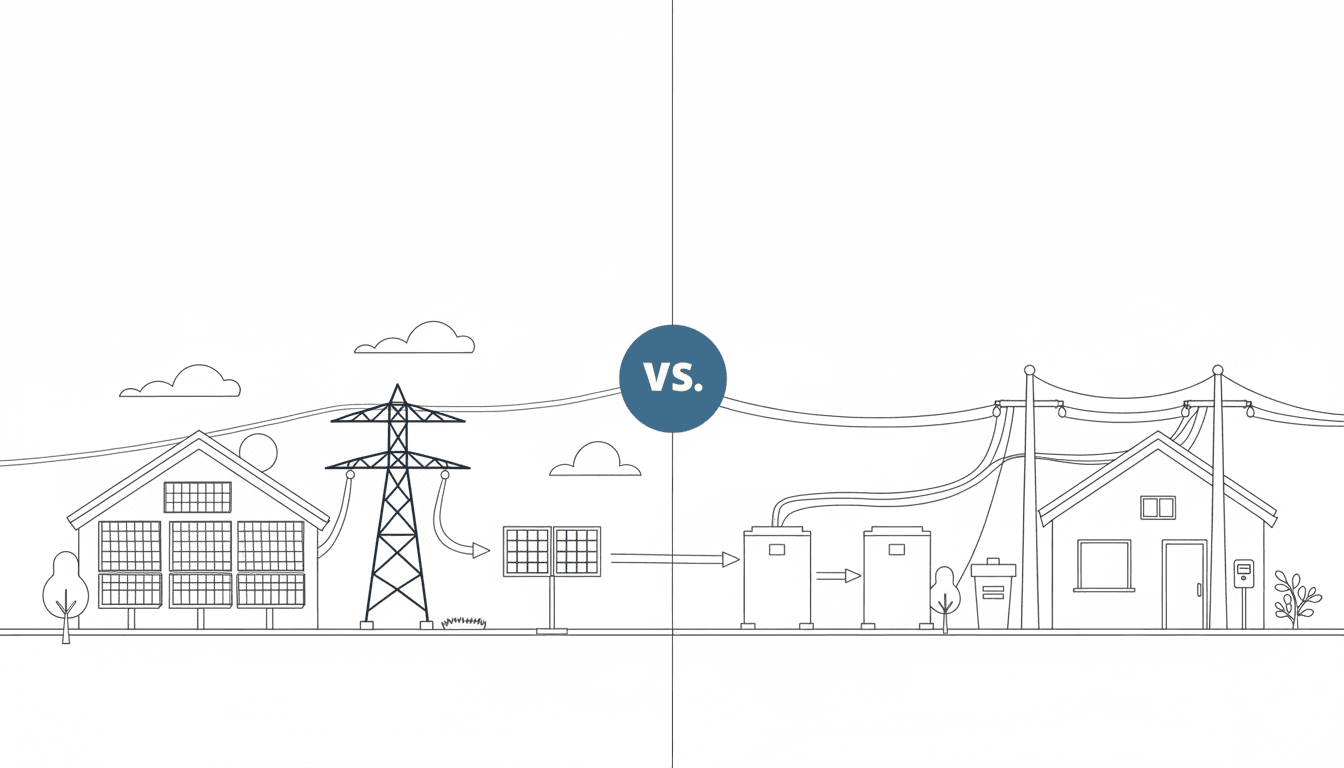
As the global demand for cleaner and more sustainable energy grows, solar power has steadily risen in popularity. For individuals and businesses considering solar energy, a major decision is whether to opt for an on-grid or off-grid system.
While both harness energy from the solar energy system installed, they function differently and come with distinct benefits and drawbacks.
What Is an On-Grid System?
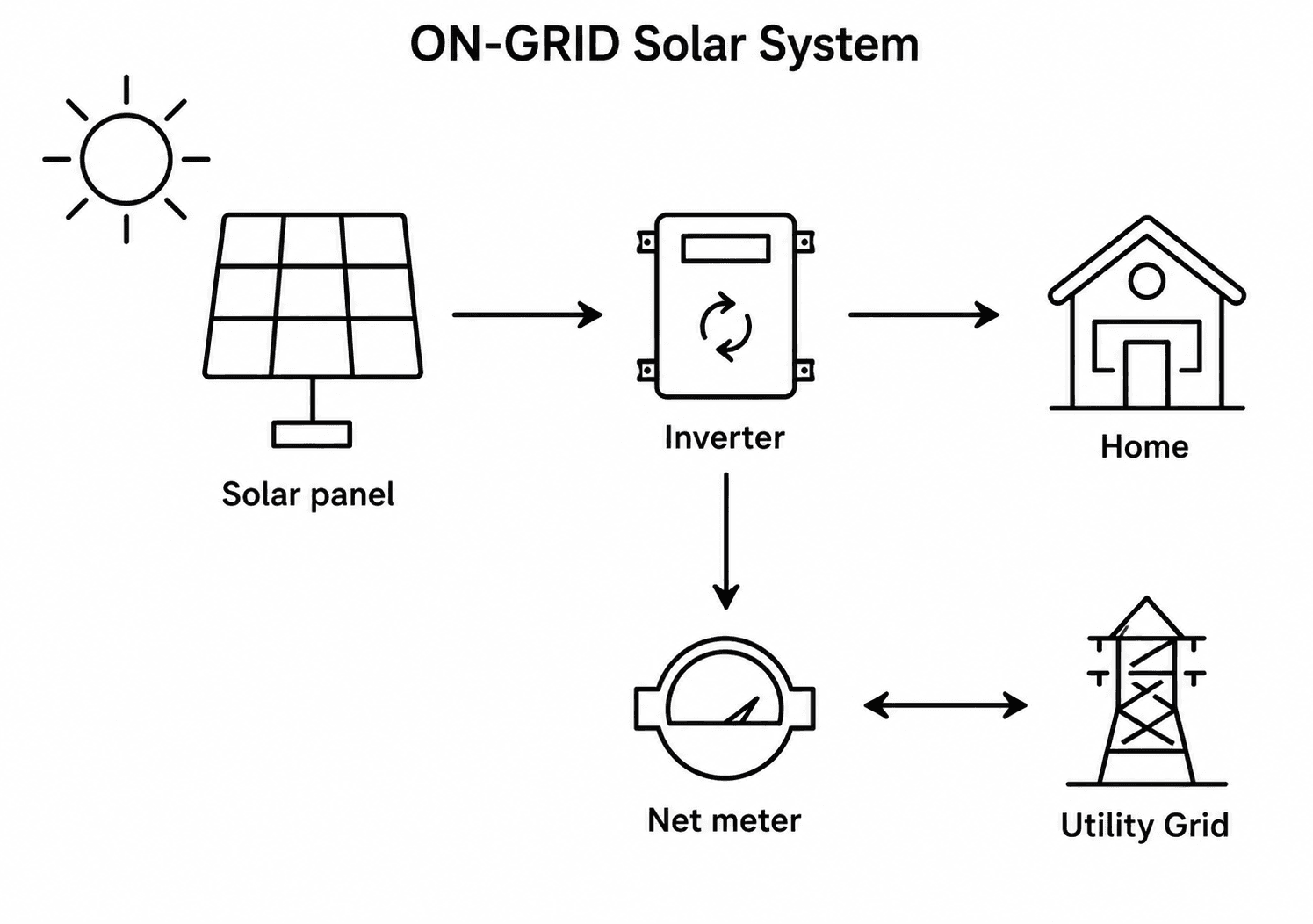
An on-grid or grid-tied solar system connects directly to the public electricity grid. During the day, solar panels, capture sunlight and convert it into direct current (DC) electricity. This electricity is then routed to an inverter, which transforms it into alternating current (AC) to power household or commercial appliances. From there, the AC electricity flows into the building’s main electrical service panel, distributing power throughout the structure.
A bidirectional net meter returns any excess electricity generated by the system to the grid if it exceeds consumption. Users can reduce their utility bills by using net metering to receive credits for this excess energy. It's crucial to remember that state-specific net metering laws can have an impact on the computation of credits.
Source: Tata Power
During night hours or periods of insufficient solar generation, electricity is drawn from the grid to meet the demand.
Since on-grid systems use the utility grid as a backup, they don’t require battery storage. This makes them more affordable to install and maintain. However, they do rely on the grid, so during a power outage, your solar system will shut down for safety, unless it includes a hybrid inverter and battery backup.
What Is an Off-Grid System?
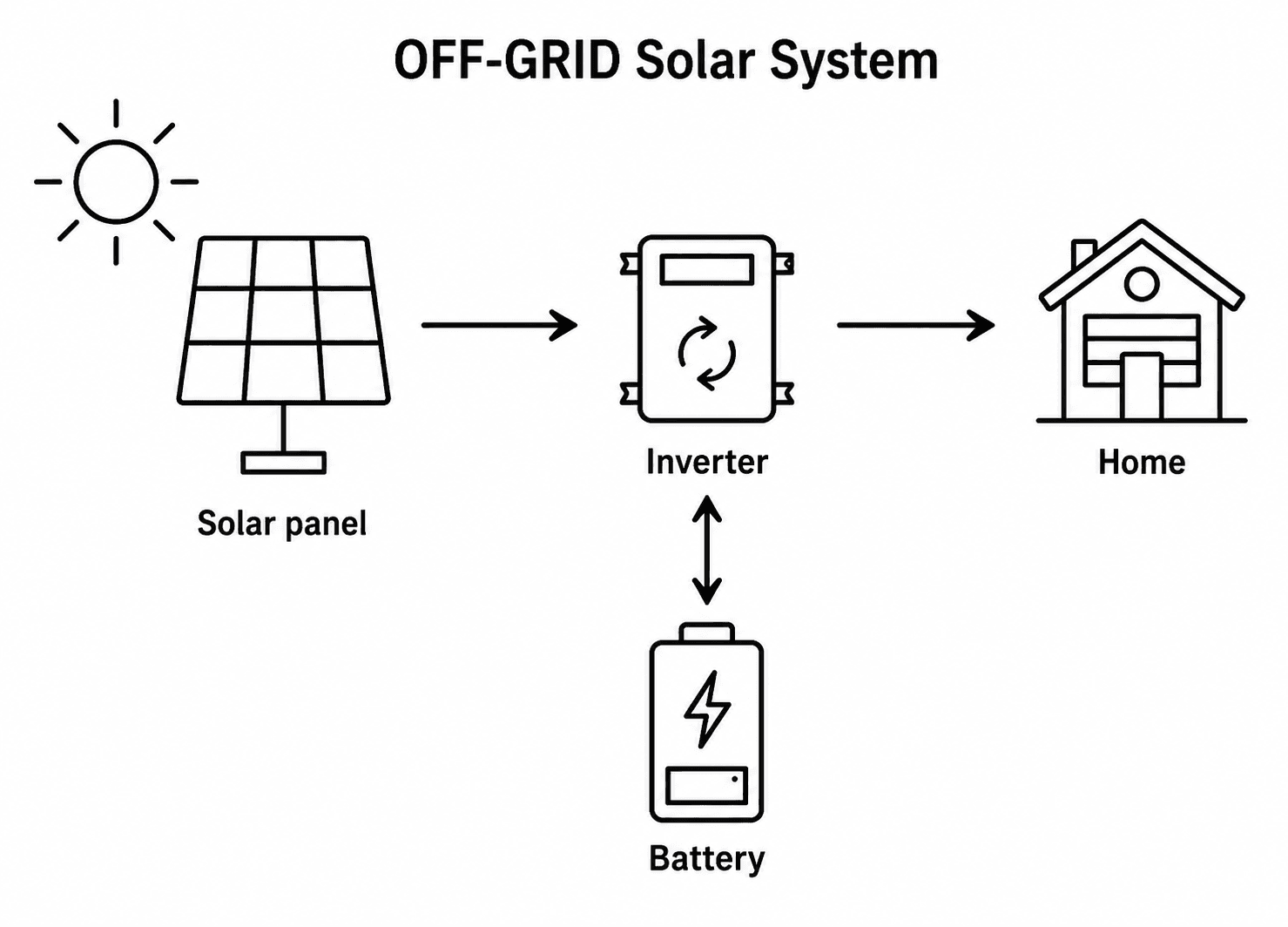
The off-grid solar system operates autonomously, eliminating the need for any grid connection. The effective functioning of this system mandates the inclusion of a battery energy storage system to store the excess solar energy generated during daylight hours. The key components of the off-grid solar system includes solar panels, a charge controller, a storage battery, mounting structures, and an inverter.
Source: Tata Power
Because they’re not connected to the grid, off-grid systems offer full energy independence. That means no worries about utility outages or rate hikes. However, this freedom comes with higher costs. Batteries and other essential components increase the upfront investment, and the system requires careful planning to meet energy demands, especially during winter or long cloudy stretches.
Costs
On-grid systems are generally more cost-effective upfront. With no need for batteries or backup generators, installation usually involves only the panels, inverter, and wiring. Costs can be further reduced by leveraging financial incentives like net metering and government rebates.
Off-grid systems, on the other hand, are more expensive to set up. Batteries, charge controllers, and potentially fuel-powered generators add to the price. Plus, batteries often need replacement every few years. Despite the higher cost, off-grid systems can save money over time in places where grid power is costly or unavailable.
Reliability and Independence
On-grid systems offer reliable electricity, as long as the grid is running. You don’t have to worry about power limits, but during an outage, your system won’t function unless it has a backup battery or hybrid inverter.
Off-grid systems provide full independence from public utilities. You won’t be affected by blackouts or rising energy prices. But they require careful energy management. If the battery runs out and there’s no generator, you could be without power. Monitoring and maintaining the system is essential.
Environmental Impact
Both systems reduce reliance on fossil fuels, helping the environment. On-grid setups increase efficiency by sending extra power back to the grid, supporting the community and reducing carbon emissions.
Off-grid systems eliminate grid dependence entirely, which can be ideal for those pursuing total sustainability. However, battery production and disposal carry environmental concerns. Thankfully, newer lithium-ion batteries are more eco-friendly than older lead-acid types, but proper recycling remains important.
Now, Choosing between on-grid and off-grid depends on factors like location, budget, and energy habits. If you live in an area with stable grid access and prefer a simple, low-maintenance system, on-grid is probably the way to go. You’ll benefit from lower costs and financial incentives.
If you’re in a remote area or value independence and resilience, an off-grid system could be worth the investment. Though costlier and more complex, it provides autonomy from the grid and can be essential where grid infrastructure is lacking or unreliable.
Frequently Asked Questions:
1. Do on-grid solar systems work during power outages?
Typically, no. On-grid systems shut down during grid outages for safety unless equipped with a hybrid inverter and backup battery system.
2. Why do off-grid systems require batteries?
Since off-grid systems don’t have access to the public grid, they need batteries to store excess energy for use at night or during cloudy days.
3. Can I upgrade my on-grid system to off-grid later?
Yes, but it requires significant changes like adding batteries and potentially a new inverter. It’s best to plan this transition from the start if you’re considering it.
4. How long do solar batteries last in off-grid systems?
Depending on the type and usage, solar batteries generally last 5–15 years. Lithium-ion batteries have a longer lifespan and are more eco-friendly than older lead-acid types.


