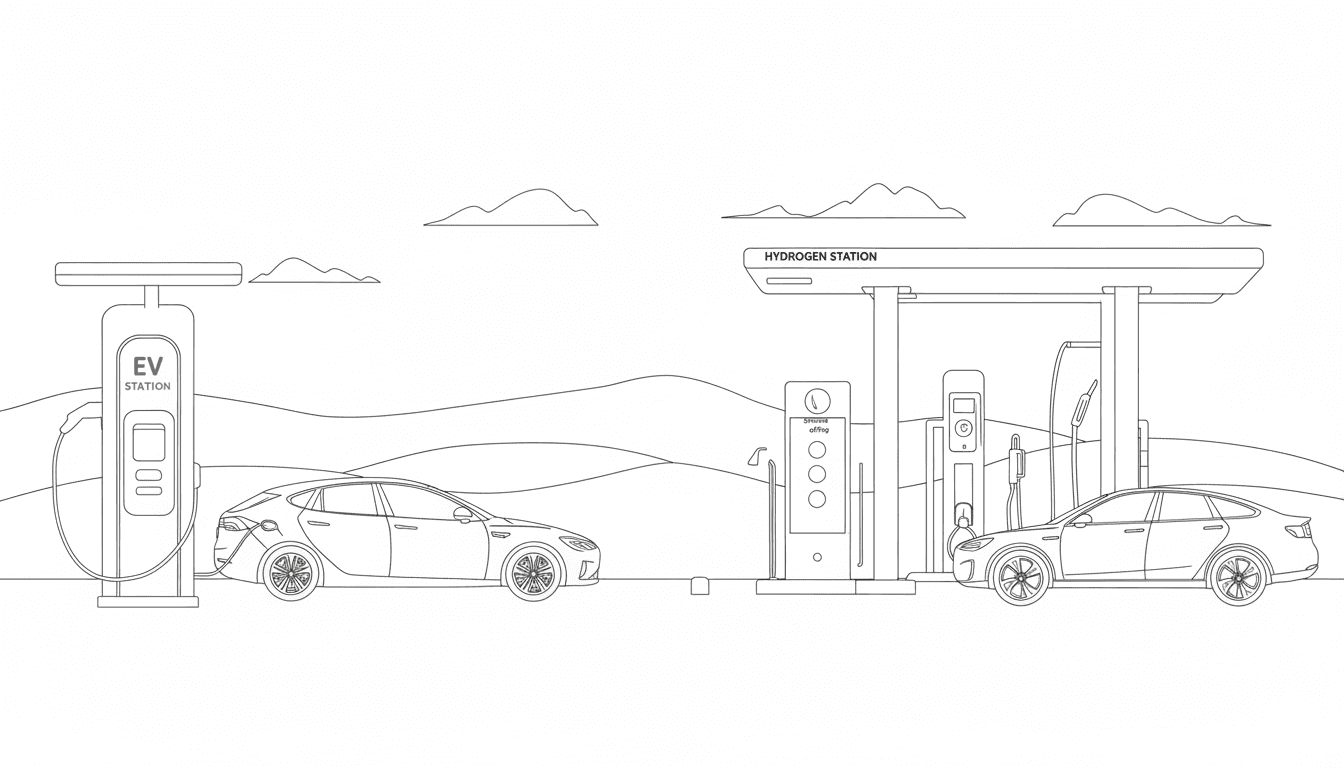
Cars have always been a big part of our lives. They take us to school, to work, to the market, and even on long trips to visit family. But most cars today use petrol or diesel, and that creates smoke that goes into the air. This smoke is not good for our planet because it makes the air dirty and adds to global warming. Scientists and engineers around the world are now looking for better ways to run cars without harming the Earth. Two exciting solutions are electric cars and hydrogen cars. Both sound very modern, but they are real and already on the roads. Let’s explore them in a simple way and see how they are different, how they help, and what the future might look like.
What Are Electric Cars?
An electric car, often called an EV, is powered by a big battery. This battery is similar to the one inside your mobile phone or toy car, but it is much larger and more powerful. When you want to use an electric car, you need to charge it, just like you charge your phone. Once the battery is full, it sends energy to the motor, and the motor makes the wheels move.
Electric cars have been around for a while, but in the past they were not very popular because the batteries were weak and the cars could not travel far. Today, things have changed. Batteries are stronger, cars can travel hundreds of kilometers in one charge, and charging stations are appearing in many cities. Brands like Tesla, Tata, Hyundai, and Nissan already sell electric cars that many people use. These cars do not produce smoke from their pipes, which makes them much cleaner than petrol or diesel cars.
What Are Hydrogen Cars?
Hydrogen cars may sound even more futuristic, but they are real too. A hydrogen car does not have a normal engine. Instead, it has something called a fuel cell. The fuel cell works in a special way: the car stores hydrogen gas in tanks, and when the car runs, this hydrogen mixes with oxygen from the air. Together, they create electricity inside the fuel cell. That electricity powers the motor, and the car moves forward.
The most amazing part is that the only thing that comes out of the car’s pipe is water vapor. No smoke, no harmful gases just clean water. That is why hydrogen cars are often called “zero-emission cars.” Companies like Toyota and Hyundai already make such cars, like the Toyota Mirai and Hyundai Nexo. They look like normal cars, but inside, they work very differently.
How Do They Feel to Drive?
Both electric and hydrogen cars are quiet and smooth to drive. Unlike petrol cars, they do not make loud engine sounds. When you press the accelerator, the response is quick because electric motors give instant power. Some people say that driving an electric car feels almost like riding on a spaceship because it is so silent.
Hydrogen cars feel very similar to electric cars, because in the end both use electric motors. The main difference is how the electricity is made. In electric cars, it comes from the battery. In hydrogen cars, it comes from the fuel cell. But for the driver, both feel modern, comfortable, and fun.
Charging vs Refueling
One of the biggest differences between electric cars and hydrogen cars is how we “fill them up.”
For an electric car, you need to charge the battery. If you use a normal plug at home, it can take many hours sometimes even overnight. With fast chargers, it can take less than an hour, but even then it is longer than filling a petrol tank.
For a hydrogen car, refueling is much faster. It feels very similar to filling petrol or diesel. You drive to a hydrogen station, connect the nozzle, and in a few minutes the tank is full. That means hydrogen cars can save time for people who travel long distances and do not want to wait around.
How Far Can They Go?
Electric cars today can usually travel between 200 to 500 kilometers, depending on the model. Some advanced ones can go even further. For most city drivers, this is more than enough. But if you want to go on a very long trip, you may need to stop and recharge along the way.
Hydrogen cars can often travel 500 to 700 kilometers on one tank. That is similar to many petrol cars. This makes hydrogen cars more suitable for people who drive long distances regularly, like taxis, buses, or trucks.
Stations and Infrastructure
Here is where things get tricky. Electric charging stations are growing quickly. In many cities, you can already see special spots for charging cars in parking lots, malls, and even on highways. Governments and companies are working hard to add more stations every year.
Hydrogen stations, on the other hand, are very rare. Building them is expensive and difficult. Right now, only a few countries like Japan, South Korea, Germany, and the United States have hydrogen stations in good numbers. In most parts of the world, it is almost impossible to find one. This makes hydrogen cars hard to use today, even though they work well.
Hydrogen vs Electric Cars
Thing to Compare | Hydrogen Cars | Electric Cars |
What powers them? | They carry a tank of hydrogen gas. The car makes electricity from hydrogen and air. | They carry big batteries that store electricity. |
Refueling / Charging | Very fast! Like filling petrol about 3–5 minutes. | Slower. Charging at home can take hours. Fast charging can take 30–60 minutes. |
How far can they go? | Usually 500–600 km on one tank. | Usually 300–500 km on one charge. |
Energy use (Efficiency) | Wastes more energy because hydrogen must be made, stored, and changed back to electricity. | Uses energy better because electricity goes straight into the battery and motor. |
Pollution | Car itself makes only water vapor (no smoke). But making hydrogen can cause pollution if made from coal or gas. | Car itself makes no smoke. Making electricity can cause pollution if power plants burn coal, but it is cleaner if power comes from sun, wind, or water. |
Stations / Charging places | Very few hydrogen stations in the world. Hard to find. | Charging places are everywhere and growing fast. You can even charge at home. |
Cost | Cars and fuel are more expensive. | Cars can also be costly, but charging is usually cheaper than buying hydrogen. |
Speed / Fun to drive | Smooth, good to drive. | Very quick and powerful instant push when you press the pedal. |
Safety | Hydrogen is very light and can catch fire if it leaks, so tanks must be very strong. | Batteries can catch fire if damaged, but cars are built with safety systems. |
Best for | Long trips, trucks, buses, and places where quick refueling is needed. | Daily driving, city trips, and places with charging stations. |
Cost and Affordability
When we think about cars, cost is always important. Electric cars used to be very expensive, but prices are slowly coming down. Batteries are cheaper now, and many governments give discounts or tax cuts to people who buy electric cars. Over time, charging an electric car is usually cheaper than buying petrol.
Hydrogen cars are still very costly. The technology inside them, especially the fuel cell, is complex and expensive. Hydrogen fuel itself also costs a lot because it is not easy to make and store. That is why right now, hydrogen cars are mostly used for testing, research, or by people who want something new and special.
Safety Concerns
Some people worry about safety. Electric cars have big batteries, and if damaged, they could catch fire, but this is very rare. Car makers add many safety layers to protect the battery.
Hydrogen is a very light and flammable gas. It needs strong tanks to store it safely. Luckily, the tanks in hydrogen cars are designed to be extremely tough. Tests show that they can survive crashes and heat. Both electric and hydrogen cars are generally safe, but like all new technology, they need strict rules and careful design.
Environmental Impact
The biggest reason people like these cars is the environment. Both types are cleaner than petrol or diesel cars when they are driving, but there is more to think about.
Electric cars need large batteries made from materials like lithium and cobalt. Mining these materials can harm the environment if not done carefully. Recycling old batteries is also a challenge, though scientists are working on better solutions.
Hydrogen cars only release water, but making hydrogen fuel is not always clean. Most hydrogen today is made from natural gas, which produces carbon dioxide. To be truly green, hydrogen must be made using renewable energy, like solar or wind, through a process called electrolysis. This is possible, but still expensive.
Which Is Better for the Future?
This is the big question everyone asks: which is better, hydrogen or electric? The truth is, both have strengths and weaknesses. Electric cars are more practical today. They are easier to charge, cheaper to run, and charging stations are spreading quickly. Hydrogen cars are better for long trips and quick refueling, but stations are rare and fuel is costly. Many experts believe that in the future, we will see both types of cars. Electric cars may be common for families and city driving, while hydrogen cars may be used for buses, trucks, and long-distance travel. Instead of fighting, the two technologies might work together to make transport cleaner.
Conclusion
Cars are changing, and the change is for the better. Electric and hydrogen cars are two new ways of traveling without hurting the planet. Electric cars are leading the way today because they are easier to use and cheaper, but hydrogen cars also have big potential, especially for the future. Both kinds of cars are like superheroes fighting pollution and protecting Earth. No matter which one wins, the most important thing is that we, as humans, will breathe cleaner air and live on a healthier planet.
The next time you see an electric car charging or hear about a hydrogen car, remember that this is part of a big story, the story of how we are building a cleaner, smarter, and brighter future for everyone.
Frequently Asked Questions:
1. What’s the biggest factor that will shape the future of both?
Energy infrastructure. As grids get cleaner, electric cars become greener. For hydrogen, the key is scaling up green hydrogen production and building refueling stations.
2. Which technology is winning the passenger car market?
Electric cars. They’ve gone mainstream, with falling battery costs, wide infrastructure, and automakers shifting toward all-electric lineups. Hydrogen passenger cars remain niche.
3. Where will hydrogen cars likely succeed most?
In industries where batteries struggle due to weight or energy demands: long-haul trucking, cargo shipping, aviation, and heavy industry (like steelmaking).
4. Are electric cars harder to maintain than hydrogen cars?
No. Electric cars are simpler, with far fewer moving parts than traditional or hydrogen cars. They typically need less maintenance and fewer repairs.


