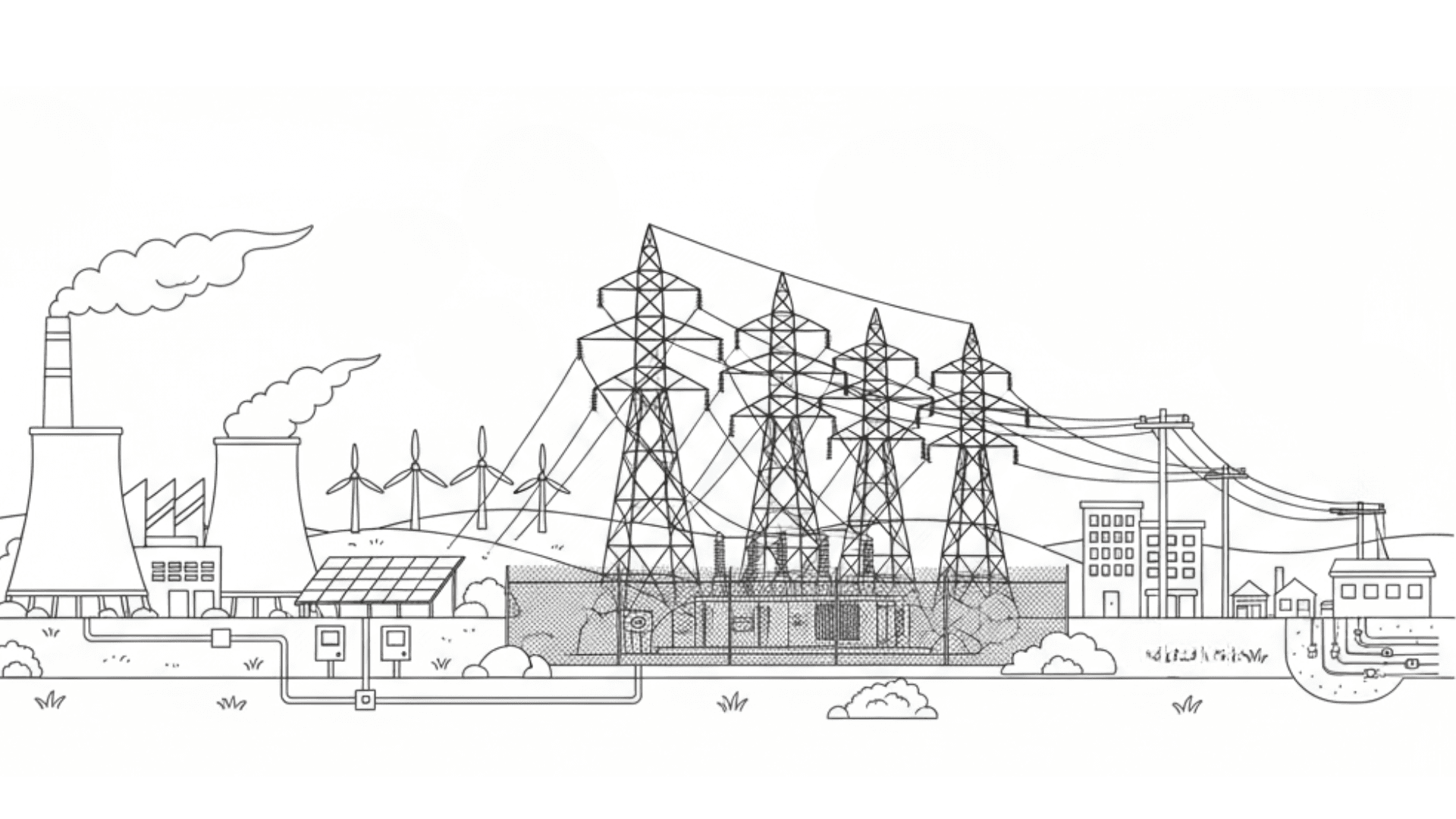
India's electricity sector is large and complicated, with multiple critical stakeholders, regulators, and technology involved in ensuring electricity is supplied continuously to homes, businesses, and industries spread across the country. Let’s take a look -
Regulatory Bodies
Several organizations oversee and control India's electrical industry to guarantee effective electricity production, transmission, distribution, and use. The following are the main regulatory agencies in charge of the industry:
1. Ministry of Power (MoP): The general policies and regulations of India's electric sector are under the purview of the Ministry of Power, a central government ministry. The ministry is charged with overseeing electricity production and infrastructure development, including generation, transmission, and delivery, as well as maintenance projects.
2. Central Electricity Regulatory Commission (CERC): The CERC is the national regulatory authority that oversees the functioning of the electricity market, The regulatory functions of the authority include overseeing the tariffs of generating companies owned or controlled by the Central Government, as well as those not owned or controlled by the government but involved in the generation and sale of electricity across multiple states. The authority also regulates the inter-state transmission of electricity, determining the corresponding transmission tariffs. It is responsible for issuing licenses to entities operating as transmission licensees or electricity traders in inter-state operations. Additionally, the authority works to improve access to information for all stakeholders and adjudicates disputes involving generating companies.
3. State Electricity Regulatory Commissions (SERCs): The State Electricity Regulatory Commissions (SERCs) in each Indian state are in charge of regulating electricity distribution, rates, and policies at the state level. These commissions collaborate with the CERC, although they concentrate on regional concerns such as power distribution, consumer protection, and state-specific renewable energy goals.
4. Central and State Transmission Utilities: In India, both state and central utilities are in charge of power transmission. To ensure that power can be transmitted between states, interstate electricity transmission is handled centrally by the Power Grid Corporation of India Limited (PGCIL). At the state level, intra-state transmission and grid stability are handled by the transmission utilities in each state.
5. Ministry of New and Renewable Energy (MNRE): MNRE is the nodal Ministry of the Government of India for all matters relating to new and renewable energy. The broad aim of the Ministry is to develop and deploy new and renewable energy to supplement the energy requirements of the country.
Power Generation in India
Electricity in India is generated from a diverse mix of sources, including thermal, hydro, nuclear, and renewable energy.
1. Thermal Power Generation: Thermal power plants, which burn coal, natural gas, or oil, are the dominant source of electricity generation in India. Coal-fired plants, in particular, contribute to a large portion of India's electricity generation capacity. However, this heavy reliance on coal has led to concerns about air pollution and carbon emissions, which has prompted efforts to transition to cleaner sources of energy.
2. Hydropower: Hydropower is another significant source of power generation, particularly in states with abundant water. Large hydroelectric dams as well as smaller run-of-river projects contribute a sizable share to the national grid.
3. Nuclear Power: India also generates a portion of its electricity from nuclear power, with several nuclear plants spread across the country.
4. Renewable Energy: India has made substantial progress in expanding renewable energy capacity, particularly in solar and wind power. India aims to achieve 500 GW of non-fossil fuel-based power by 2030, and renewable energy has become a key focus of national energy policy.
India's total electricity generation capacity has reached 452.69 GW, with renewable energy contributing a significant portion of the overall power mix. As of October 2024, renewable energy-based electricity generation capacity stands at 201.45 GW, accounting for 46.3 percent of the country's total installed capacity. This marks a major shift in India’s energy landscape, reflecting the country’s growing reliance on cleaner, non-fossil fuel-based energy sources.
Transmission of Electricity
After producing electricity, it must be transmitted from power stations to distribution networks. For long-distance transport, transmission is carried out on high-voltage lines to minimize losses.
1. High-Voltage Transmission Lines: Electricity is transported via high-voltage lines from power plants to substations. The Power Grid Corporation of India (PGCIL) manages interstate and inter-regional transmission networks.
2. Substations and Step-Down Transformers: At substations, high-voltage electricity is stepped down to lower voltages suitable for local distribution. These substations are crucial for maintaining grid stability and balancing supply with demand.
3. Transmission Losses: Due to resistance in the wires, electricity transmission over long distances incurs energy losses, typically around 3-5%.
Distribution of Electricity in India
The final step in the journey of electricity is distribution, bringing power from substations to homes, industries, and businesses. This is where DISCOMs (Distribution Companies) play a crucial role.
1. Distribution Companies (DISCOMs): Delivering electricity to customers is the responsibility of DISCOMs, which are the local utilities. They are the owners of the infrastructure needed to distribute electricity, such as meters, transformers, and power lines. DISCOMs distribute electricity to end consumers after buying it from power plants (either on the open market or through long-term power purchase agreements). These businesses are usually state-owned, but to increase efficiency, privatization, and public-private partnerships have become more popular in recent years.
2. Electricity Metering and Billing: An electric meter measures the amount of electricity that reaches the customer. Customers are billed according to their electricity consumption, which is measured in kilowatt-hours (kWh) or units. In addition, DISCOMs are in charge of billing, customer service, and meter maintenance.
Frequently Asked Questions:
1. Who controls the electricity sector in India?
The electricity sector in India is managed by different bodies like the Ministry of Power, Central and State Electricity Regulatory Commissions, and various utilities.
2. What does the Ministry of Power do?
The Ministry of Power makes rules and policies for electricity production, transmission, and delivery across India.
3. What is the role of CERC (Central Electricity Regulatory Commission)?
CERC regulates electricity prices and licenses for power companies that operate across multiple states.
4. What are SERCs (State Electricity Regulatory Commissions)?
Each state has its own SERC that manages electricity prices, distribution, and customer protection within that state.


