What Are LFP Batteries?
LFP batteries, or Lithium Iron Phosphate batteries, are a type of lithium-ion battery that use iron phosphate as the cathode material. These batteries are known for their good energy density, long lifespan, and good performance under high temperatures.
Although lithium-ion batteries generally have a higher energy density, meaning they can store more energy in a smaller size, LFP batteries are considered safer as they are less prone to overheating or catching fire.
Additionally, LFP batteries are cheaper to produce because they use more abundant and less expensive materials. However, their lower energy density means more batteries might be needed to power an electric vehicle (EV), which could reduce their cost advantage.
How Do LFP Batteries Work?
LFP batteries use lithium iron phosphate with an olivine structure as the cathode material. The cathode connects to the battery's positive terminal through aluminium foil. A polymer separator lies between the cathode and anode to prevent electrons from passing through while allowing lithium ions to move freely. The anode is made of graphite and is connected to the negative terminal using copper foil. An electrolyte fills the battery to enable ion movement, and the entire setup is sealed within a metal case.
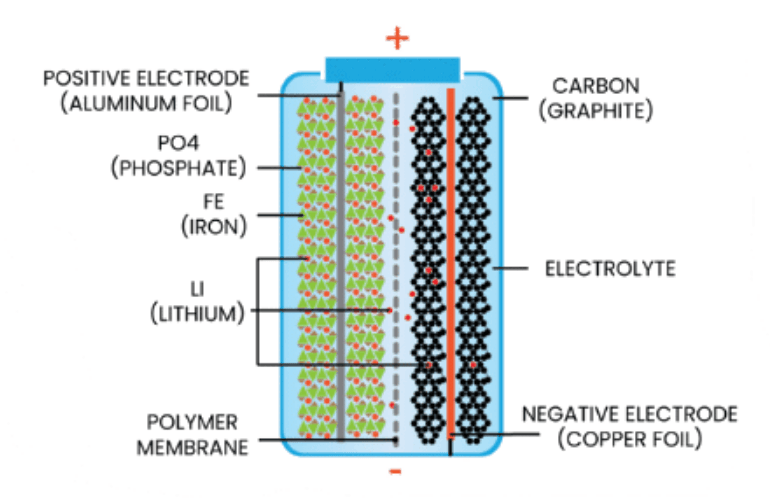
Source: First Phosphate
During charging, lithium ions move from the cathode to the anode through the separator, embedding themselves in the graphite lattice. As this happens, lithium iron phosphate in the cathode is converted to iron phosphate. During discharge, the process reverses: lithium ions leave the anode, travel through the separator, and re-enter the lithium iron phosphate cathode.
LFP Batteries in EVs
Although the EV battery market is mainly dominated by NMC, the market share of manufacturers switching to LFP are increasing rapidly. Mainly due to factors like affordability, LFP batteries are less vulnerable to thermal runaway—which can lead to fires—than NMC batteries when damaged or defective.
LFP batteries have lesser energy density than NMC, but with recent advancements in technology, the gap is shrinking.
LFP Batteries in Energy Storage Applications
LFP batteries are in high demand for energy storage systems, particularly for large-scale grids and residential use.
Grid-Scale Energy Storage
With the increasing use of renewable energy sources like solar and wind, efficient energy storage systems are essential. LFP batteries are ideal for storing excess energy generated during the day and releasing it when demand peaks. This helps stabilize the grid and reduces dependency on fossil fuels. Their long cycle life ensures they can operate effectively for years without significant performance loss.
Residential and Commercial Energy Storage
Homeowners and businesses are turning to LFP-based systems to complement solar panels. These systems allow solar energy to be stored for nighttime use or during power outages, reducing electricity bills and increasing energy independence. LFP batteries’ safety and longevity make them especially suitable for residential and commercial settings where reliability is critical.
Many companies use LFP batteries for their Residential Energy Storage products, one such popular option is Tesla’s Powerwall.
Advantages of LFP Batteries
LFP batteries have several advantages over traditional lead-acid and other lithium-ion batteries:
1. Safety: LFP batteries are less likely to overheat or catch fire, making them a safer option.
2. Cost-Effectiveness: Made with more affordable and abundant materials, LFP batteries are generally cheaper to produce.
3. Low Maintenance: Unlike lead-acid batteries, LFP batteries require no regular maintenance.
4. Environmental Benefits: They are more eco-friendly, as they use non-toxic materials and pose fewer disposal risks.
LFP V/S Lead-Acid Batteries
LFP batteries and Lead Acid batteries are two commonly used battery technologies, but they differ significantly in performance, lifespan, cost, and other factors.
LFP is a type of lithium-ion battery with LiFePO₄ as the cathode material. Lead Acid, uses lead dioxide (PbO₂) as the cathode, spongy lead (Pb) as the anode, and sulfuric acid as the electrolyte.
The Energy Density of LFP batteries is higher (~90-160 Wh/kg). This means more energy can be stored in a smaller, lighter package. Lead Acid has lower energy density (~80-90 Wh/kg), making it much heavier for the same capacity.
LFP batteries have better Cycle Life, typically 2000-5000+ charge cycles at 80% depth of discharge (DoD). Some can last 10+ years. Lead Acid have a shorter lifespan, around 300-500 charge cycles at 50% DoD.
Since, LFP is a relatively newer technology compared to the age-old lead acid batteries, they can charge a lot faster as well it does not require frequent maintenance.
One main advantage of LFP is the use of comparatively non-toxic materials compared to lead-acid batteries where lead and acid are hazardous to the environment if not handled properly.
Although LFP has many advantages over lead-acid, there is a factor of higher upfront cost as lithium-based technologies are still slightly more expensive than lead acid. However, considering the higher energy density and life span, it might end up being on par or cheaper in the long run.
Frequently Asked Questions:
1. Are LFP batteries safe?
Yes, LFP batteries are considered very safe. They are less likely to overheat or catch fire compared to some other types of lithium batteries.
2. What makes LFP batteries good for solar energy storage?
They can store extra energy from the sun during the day and use it at night. They also last many years and don’t need much maintenance.
3. How long do LFP batteries last?
They usually last 2000 to 5000 charging cycles, which can mean 10 or more years depending on how often they are used.
4. Do LFP batteries need maintenance?
No, LFP batteries are maintenance-free, unlike lead-acid batteries which need water checks and other care.
5. Are LFP batteries eco-friendly?
Yes. They use non-toxic materials and are less harmful to the environment than batteries that contain lead or strong acids.


