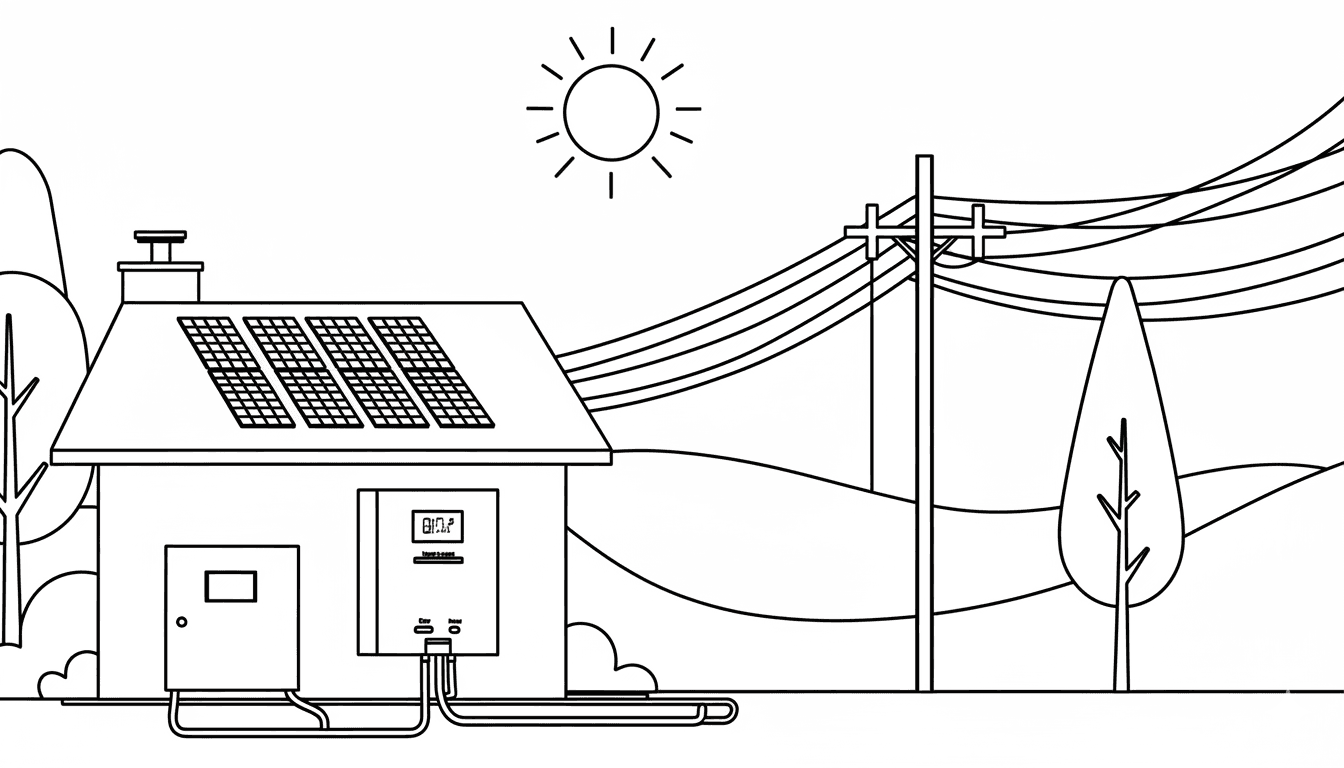
We all have experienced unexpected power outages in our lives; to prevent it, we have set up Uninterruptible Power Supply (UPS) systems in our homes or businesses. While traditional (UPS) systems have long been the preferred choice for maintaining power during outages, Lithium-based Battery Energy Storage Systems (BESS) are becoming a potent substitute thanks to advancements in battery technology.
Let's take a look at how a lithium battery works
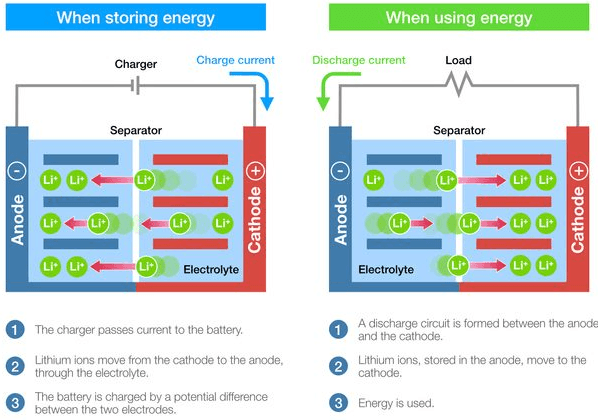
A lithium battery is a type of rechargeable battery that uses lithium ions as a key component of its electrochemistry. During a discharge cycle, lithium atoms in the anode are ionized and separated from their electrons.
The lithium ions move from the anode and pass through the electrolyte until they reach the cathode, where they recombine with their electrons and are electrically neutralized. The movement of these lithium ions through the battery's circuit creates the electrical power supplied by the battery.
Source: EATON
In this article, we will take a look at how a lithium-based BESS can not only replace a UPS but also provide extra advantages.
Understanding the basics
A UPS is designed to provide instant backup power in the event of a grid failure, preventing any interference with sensitive electronics like computers, medical equipment, or industrial machinery.
Traditional UPS systems use lead-acid or lithium-ion batteries to supply power for a short time, typically minutes, which is enough to cover the gap until a generator kicks in or the main power source is restored.
A BESS, on the other hand, is a complete energy storage system that can store electricity from renewable sources (such as solar or wind) or the grid and deliver power as needed. Lithium-ion batteries, which are more effective, have a higher energy density and last longer than lead-acid batteries.
Key Considerations
While a BESS can function as a UPS, it’s not as simple as plugging it in and expecting instant power switchover. Here are some important aspects to keep in mind:
1. Separate Connection Points
Separate connection points for backup loads and grid input are built into BESS inverters. Accordingly, proper system configuration is essential to guarantee a smooth power supply during an outage.
2. Interruption Time
For sensitive electronics, traditional UPS systems' near-instantaneous switchover (usually less than 4 ms) is essential. A BESS, on the other hand, might take a little longer (less than 10 ms) to switch from grid to battery mode. Although this is sufficient for the majority of applications, ultra-sensitive equipment might need extra protections, like a small inline UPS, to get through the transition.
3. Power Capacity & Backup Duration
The longer backup duration of a BESS is one of its main benefits when used as a UPS. Conventional UPS systems are made to provide power for brief periods of time, usually just a few minutes. However, depending on the battery size and load requirements, BESS can supply power for a number of hours. For companies, data centers, and even homes that require continuous backup power, this makes it perfect.
4. Energy Management Capabilities
Unlike traditional UPS systems that only serve as a backup, a BESS offers additional functionalities such as:
• Peak Shaving: Reducing electricity costs by supplying stored power during peak demand hours.
• Load Shifting: Using stored energy when electricity rates are high and charging when rates are low.
• Renewable Energy Integration: Storing excess solar or wind energy for later use.
These features make a BESS a more versatile and cost-effective investment in the long run.
Benefits of Using a Lithium BESS Over a Traditional UPS
The longer backup time of a lithium-based BESS is one of its biggest benefits. A BESS can supply energy for hours, making it far more dependable during extended outages than traditional UPS systems, which only provide power for a few minutes.
Furthermore, compared to lead-acid batteries, which have an efficiency of 70%, lithium-ion batteries have an efficiency of 90–95% for charge/discharge rates. Given that lead-acid batteries typically degrade in just three to five years, their longer lifespan—which frequently exceeds ten years—also makes them a more environmentally friendly option.
In addition to their longevity and efficiency, BESS solutions are simple to integrate with solar panels and other renewable energy sources, allowing users to store and utilize green energy as needed. This increases energy resilience while reducing dependency on fossil fuels. Although a BESS may initially cost more than a traditional UPS, over time, the electricity bill savings from peak shaving and demand response techniques, as well as the reduced need for battery replacements, make it a practical choice.
The Ideal Use Cases
Many industries can benefit from a BESS. It guarantees energy cost savings through demand management for office spaces, extends backup power for data centers in businesses and commercial buildings, and keeps retail stores' power stable during outages.
Homeowners who use solar energy in their homes can take advantage of stored backup power, and those who live in places where blackouts occur frequently can guarantee a steady supply of energy.
Frequently Asked Questions:
1. How efficient is a lithium BESS compared to a lead-acid UPS?
Lithium BESS systems have a charge/discharge efficiency of 90–95%, while lead-acid batteries used in UPS systems are only around 70% efficient. That means less energy is wasted when storing and using power.
2. What about lifespan? How long do BESS and UPS batteries last?
Lithium batteries in BESS systems can last 10 years or more, while lead-acid batteries in traditional UPS systems often need replacing in 3–5 years.
3. Does a BESS offer longer backup than a UPS?
Yes! A BESS can provide power for hours, depending on the battery size and your energy needs. In comparison, a UPS usually lasts only a few minutes, just long enough for a generator to start or systems to shut down safely.
4. Is a BESS better for the environment?
Yes. Lithium batteries are more efficient, last longer, and are less harmful to the environment than lead-acid batteries, which contain toxic materials.


