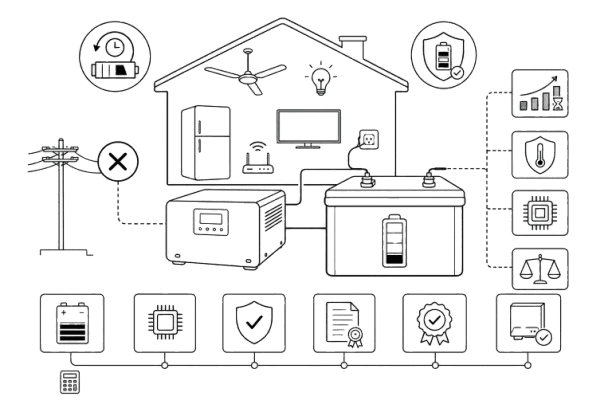
Power cuts are common in many parts of India. A good inverter with the right battery keeps your lights, fans, fridge, and Wi-Fi running when the power goes out. For years, most homes used lead-acid batteries. But now, more people are switching to a lithium battery inverter for home use. Why? Because lithium batteries last longer, charge faster, and take up less space.
If you are planning to buy one, this guide will help you understand what to look for, in simple words.
Why Choose Lithium Over Lead-Acid?
Lead-acid batteries are cheaper to buy, but they cost more in the long run. Here's a quick comparison:
Feature | Lead-Acid Battery | Lithium Battery |
Lifespan | 2–3 years | 8–10 years |
Charging time | 6–8 hours | 2–3 hours |
Maintenance | Needs water top-up | No maintenance |
Size and weight | Heavy, bulky | Light, compact |
Backup during power cuts | Reduces over time | Stays consistent longer |
A lithium battery costs more upfront, but since it lasts 3–4 times longer than lead-acid, you save money over the years. You also don't have to keep checking water levels or worry about acid leaks.
How Much Backup Can a Lithium Battery Provide?
The backup time depends on the battery capacity and the connected load.
Battery Capacity | Approximate Backup |
2kWh | 4–6 Hours (Light Load) |
5kWh | 8–12 Hours |
10kWh | 15–24 Hours |
15kWh | Suitable for Larger Homes & Solar Systems |
Actual backup time varies depending on the appliances in use.
Choose a Battery with a Smart BMS
A Battery Management System (BMS) is the brain of a lithium battery. It continuously monitors the battery's health and protects it from conditions that could reduce performance or cause damage.
A quality BMS provides protection against:
Overcharging: Prevents excessive charging that can damage battery cells.
Over-discharging: Stops the battery from draining beyond safe levels, helping extend its lifespan.
Short Circuits: Instantly disconnects the battery to prevent electrical damage and improve safety.
Overcurrent: Protects the battery from excessive current during charging or heavy loads.
Overheating: Monitors temperature and helps prevent damage caused by high operating temperatures.
Cell Imbalance: Balances individual battery cells to ensure consistent performance and longer battery life.
A smart BMS not only enhances safety but also improves efficiency, extends battery lifespan, and ensures reliable performance throughout the battery's life.
Key Things to Check Before Buying
1. Battery Capacity (Ah or Wh)
This tells you how much power the battery can store. A bigger home with more appliances (fridge, AC, water pump) needs a higher capacity battery. For a small home with basic needs (lights, fans, TV, Wi-Fi router), a smaller capacity battery is enough.
Simple tip: Add up the power (in watts) of the appliances you want to run during a power cut, and multiply by how many hours of backup you need. This gives you a rough idea of the capacity to look for.
2. Battery Management System (BMS)
This is the most important and most overlooked part of a lithium battery. The BMS is like the "brain" of the battery. It protects the battery from:
Overcharging
Overheating
Short circuits
Deep discharge (draining the battery too much)
A battery without a good BMS can be unsafe and won't last long, no matter how good the battery cells are. Always ask the seller about the BMS quality and whether it's made in-house or sourced from a trusted manufacturer.
3. Battery Chemistry: LiFePO4 is Best for Homes
Not all lithium batteries are the same. For home inverters, LiFePO4 (Lithium Iron Phosphate) is the safest and most reliable choice. It handles Indian heat well, doesn't catch fire easily, and has a longer life than other lithium types like NMC.
4. Warranty
A good lithium battery should come with at least a 3 to 5-year warranty. This shows the manufacturer trusts their own product. Avoid batteries with warranties under 2 years that's usually a sign of lower quality.
5. Brand and Certification
Check if the battery has proper safety certifications (like BIS or IEC standards). Also look up the brand's reputation read reviews, check how long they've been in business, and see if they have good after-sales support in your city.
6. Compatibility with Your Inverter
Not every lithium battery works with every inverter. Some older inverters are only built for lead-acid batteries. Check with the seller if your current inverter supports lithium batteries, or if you need a lithium-compatible inverter as well.
How Much Does a Lithium Battery Inverter Cost in India?
Prices vary based on capacity and brand, but here's a general range:
Small home setup (basic backup for lights, fans, Wi-Fi): Entry-level pricing
Mid-size home (includes fridge, TV): Mid-range pricing
Larger homes (AC, water pump, multiple rooms): Higher-end pricing
It's a good idea to get quotes from 2–3 sellers and compare what's included — battery, BMS quality, warranty, and installation.
Quick Checklist Before You Buy
Before purchasing a lithium battery for your home inverter, use this simple checklist to make an informed decision and ensure long-term performance.
Calculate your power backup needs: Estimate your total load (in watts) and the number of backup hours required.
Choose LiFePO4 chemistry: Opt for LiFePO4 batteries for better safety, longer lifespan, and higher efficiency.
Verify the BMS: Ensure the battery includes a high-quality Battery Management System (BMS) with protection against overcharging, over-discharging, overheating, and short circuits.
Check the warranty: Look for a minimum 3-year warranty backed by reliable after-sales support.
Look for safety certifications: Choose batteries that meet relevant quality and safety standards.
Confirm inverter compatibility: Make sure the battery is compatible with your existing inverter or solar system.
Compare trusted brands: Evaluate features, warranty, support, and pricing from reputable manufacturers before making your final choice.
Following this checklist will help you choose a reliable lithium battery that offers safe operation, efficient performance, and excellent long-term value.
Common Mistakes to Avoid When Buying a Lithium Battery
Choosing the right lithium battery is just as important as choosing the right inverter. Avoid these common mistakes to ensure better performance, safety, and long-term value.
Buying only based on price: Extremely cheap batteries may use low-quality cells and offer poor performance.
Ignoring inverter compatibility: Ensure your inverter supports LiFePO4 batteries for efficient charging and operation.
Overlooking the BMS: A quality Battery Management System (BMS) protects against overcharging, overheating, and short circuits.
Skipping warranty checks: Choose a battery backed by a reliable warranty and dependable after-sales support.
Buying from unverified brands: Always purchase from trusted manufacturers that meet quality and safety standards.
Choosing the wrong battery capacity: Select a battery based on your home's power consumption and required backup time.
Ignoring future needs: If you plan to install solar later, choose a battery that's compatible with solar energy storage systems.
By avoiding these mistakes, you'll invest in a safer, more reliable battery that delivers better performance and lower ownership costs over its lifetime.
Installation Tips for Better Performance
To maximize the lifespan of your lithium battery:
Install it in a cool, dry, and well-ventilated location.
Avoid direct sunlight.
Use the recommended cable size.
Ensure secure electrical connections.
Follow the manufacturer's installation instructions.
Have the system installed by a qualified technician.
Proper installation helps maintain efficiency and improves battery longevity.
Final Thoughts
A lithium battery inverter for home use is a smart, long-term investment. It saves you money on replacements, needs no maintenance, and gives reliable backup for years. The most important thing to check isn't just the battery it's the Battery Management System (BMS) inside it, since that's what keeps the battery safe and long-lasting.
Take your time, compare a few options, and choose a battery with a strong BMS and good warranty support. That way, you get peace of mind along with uninterrupted power.
Frequently Asked Questions:
1. Is a lithium battery better than a lead-acid battery for a home inverter? Yes. Lithium batteries last much longer, charge faster, require no maintenance, and provide more consistent backup compared to lead-acid batteries, making them a better long-term investment.
2. Which lithium battery is best for home inverter use? LiFePO4 (Lithium Iron Phosphate) batteries are the best choice for home inverters because they are safer, have a longer lifespan, perform well in high temperatures, and offer excellent cycle life.
3. How long does a lithium inverter battery last? A good-quality LiFePO4 battery typically lasts 8–10 years or around 4,000–6,000 charge cycles, depending on usage and maintenance.
4. Can I replace my lead-acid battery with a lithium battery? Yes, but first check whether your existing inverter supports lithium batteries. Some older inverters may require a lithium-compatible model.
5. What is a Battery Management System (BMS)? A Battery Management System (BMS) is the safety and control unit inside a lithium battery. It protects the battery from overcharging, overheating, over-discharging, and short circuits, helping improve safety and battery life.


