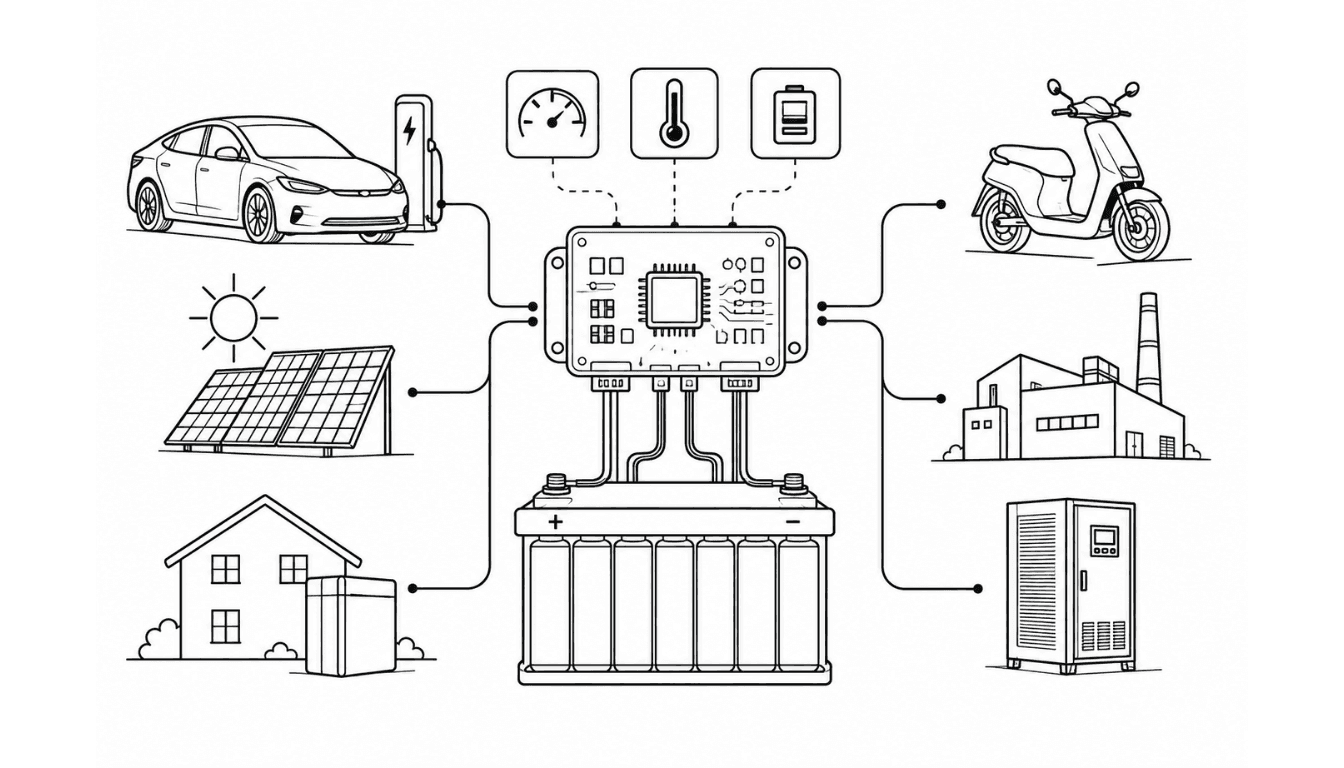
Batteries are now an important part of many products and industries. From electric vehicles and solar energy systems to backup power and industrial equipment, batteries help store and deliver energy when it is needed. But a battery cannot simply be connected to a system and left to operate on its own. It needs to be monitored and controlled to work safely and efficiently. This is where a battery controller plays an important role.
A battery controller is a key part of a modern battery system. It helps monitor the battery, control how it charges and discharges, and protect it from conditions that could cause damage. In simple terms, it acts like a control centre that keeps track of what is happening inside the battery and helps the system make the right decisions.
What Is a Battery Controller?
A battery controller is an electronic system that monitors and controls the operation of a battery. It collects information such as battery voltage, current and temperature and uses this information to determine whether the battery is operating within safe limits.
For example, when a battery is being charged, the controller checks whether the voltage and temperature are within the required range. If the battery reaches its safe charging limit, the controller can take action to prevent further charging. Similarly, during discharge, it can help prevent the battery from being discharged too much.
The main purpose of a battery controller is to help the battery operate safely, reliably and efficiently while also supporting longer battery life.
How Does a Battery Controller Work?
A battery controller continuously receives information from sensors connected to the battery. These sensors can measure important conditions such as voltage, current and temperature.
The controller processes this information and compares it with predefined safety and operating limits. Based on the information it receives, it can control different parts of the battery system.
For example, if the temperature becomes too high, the controller can take action to reduce the load or stop the battery from charging or discharging. If the battery voltage becomes too high or too low, it can also take protective action.
This continuous monitoring allows the battery controller to respond to problems before they become more serious. It helps ensure that the battery operates within its designed limits.
What Does a Battery Controller Do?
One of the most important jobs of a battery controller is battery protection. Batteries can be damaged if they are charged too much, discharged too deeply, exposed to excessive current or operated at unsafe temperatures. A controller helps detect these conditions and takes the necessary action.
The controller also monitors the battery's voltage and current during operation. This information helps the system understand how much energy is being stored or used.
Temperature monitoring is another important function. Batteries can generate heat during charging and discharging, and excessive heat can affect their performance and safety. By continuously monitoring temperature, the controller can help keep the battery within a safe operating range.
In more advanced battery systems, the controller can also help estimate the battery's State of Charge, commonly known as SoC. SoC gives an indication of how much energy is currently available in the battery. It can also support State of Health, or SoH, which provides an indication of the battery's overall condition and performance over time.
Battery Controller and Battery Management System: Are They the Same?
The terms battery controller and Battery Management System, or BMS, are sometimes used interchangeably, but they do not always mean exactly the same thing.
A BMS is generally a complete system designed to monitor, protect and manage a battery pack. It can include functions such as cell monitoring, temperature monitoring, protection, cell balancing, communication and battery diagnostics.
A battery controller can be one part of this larger system and may focus more specifically on controlling battery operation. However, the exact meaning of these terms can vary depending on the manufacturer, battery design and application.
The important point is that both systems are designed to help batteries operate safely and efficiently.
Why Is a Battery Controller Important for Lithium-Ion Batteries?
Lithium-ion batteries are widely used because they offer high energy density, good performance and a relatively long operating life. However, they also require careful monitoring and control.
Each cell in a lithium-ion battery has specific voltage and temperature limits. If these limits are exceeded, the battery can suffer damage and, in some situations, create serious safety risks.
A battery controller helps monitor these conditions and ensures that the battery operates within its safe limits. In battery packs made up of many cells, the controller can also work with cell monitoring and balancing systems to help maintain consistent performance across the pack.
This is especially important in electric vehicles and energy storage systems, where battery packs can contain a large number of cells and store significant amounts of energy.
Battery Controllers in Electric Vehicles
Electric vehicles depend heavily on their battery systems. The battery provides the energy required to power the vehicle, so maintaining its performance and safety is extremely important.
A battery controller works with the vehicle's battery system to monitor important parameters such as voltage, current and temperature. It can also provide important battery information to other vehicle systems.
During charging, the controller helps ensure that the battery is charged within the required limits. During driving, it monitors the battery as energy is being delivered to the motor.
By continuously monitoring the battery, the controller helps improve reliability and supports the safe and efficient operation of the vehicle.
Battery Controllers in Energy Storage Systems
Battery controllers are also becoming increasingly important in energy storage systems. Solar power systems, for example, can generate electricity during the day, while the energy may be needed later in the evening. Batteries can store this energy and provide it when required.
A battery controller helps manage this process by monitoring the battery during charging and discharging. It helps ensure that the battery is not operated outside its safe limits and can communicate important information to the wider energy management system.
As the use of renewable energy continues to grow, reliable battery control and monitoring will become even more important.
Other Applications of Battery Controllers
Battery controllers are used in many different applications where batteries need to be monitored and controlled. They can be found in electric two-wheelers, electric commercial vehicles, UPS systems, telecom backup systems, industrial equipment, solar energy systems and Battery Energy Storage Systems.
The requirements can be different for each application. An electric vehicle may require a controller capable of handling high power and complex battery monitoring, while a smaller backup battery system may have simpler requirements.
Regardless of the application, the basic goal remains the same: to help the battery operate safely, efficiently and reliably.
Benefits of Using a Battery Controller
A well-designed battery controller can provide several benefits to a battery system. By monitoring the battery continuously, it can help prevent operating conditions that may damage the battery.
It can also support better battery performance by ensuring that the battery operates within its recommended limits. Proper monitoring and control can contribute to longer battery life and reduce the chances of unexpected battery problems.
Another important benefit is better visibility into battery performance. Modern controllers can collect and communicate battery information, allowing users and system operators to understand how the battery is performing.
This information can also be useful for identifying potential problems early and supporting maintenance.
How to Choose the Right Battery Controller
Choosing the right battery controller depends on the application and the battery system. The battery chemistry is one of the first things to consider because different battery chemistries have different operating requirements.
The voltage and current requirements of the battery are also important. The controller must be capable of handling the expected operating range of the battery system.
Other factors such as the number of cells, temperature range, communication requirements and operating environment should also be considered. For applications such as electric vehicles and industrial energy storage, the controller may need to communicate with other electronic systems and provide detailed battery information.
A suitable controller should therefore be selected based on the complete requirements of the battery system rather than simply looking at one specification.
The Future of Battery Controllers
As battery technology continues to develop, battery controllers are also becoming more advanced. Modern battery systems are moving towards smarter monitoring, better diagnostics and more connected operation.
Future battery controllers are expected to make greater use of advanced software, data analysis and intelligent algorithms. These technologies can help improve the accuracy of battery monitoring and provide better information about battery performance and condition.
Connectivity is also becoming more important. Battery systems can increasingly communicate with other devices and software platforms, making it possible to monitor battery performance remotely.
As electric vehicles, renewable energy and energy storage systems continue to grow, the role of intelligent battery controllers will become even more important.
Conclusion
A battery controller may not be the most visible part of a battery system, but it plays an important role in keeping the battery safe and reliable. By continuously monitoring voltage, current, temperature and other important parameters, it helps control the way the battery charges and discharges.
From electric vehicles and solar energy systems to industrial equipment and backup power, battery controllers are helping modern battery systems operate more efficiently and safely.
As the demand for batteries continues to increase, smarter and more reliable battery control technologies will play an important role in the future of energy and transportation.
Frequently Asked Questions
1. What is a battery controller?
A battery controller is an electronic system that monitors and controls a battery. It helps manage charging, discharging and battery safety.
2. Why is a battery controller important?
It helps protect the battery from overcharging, over-discharging, excessive current and high temperatures, while supporting safe and reliable operation.
3. Is a battery controller the same as a BMS?
Not always. A BMS is a complete system that monitors and manages a battery pack, while a battery controller can be a specific part of the overall battery management system.
4. Where are battery controllers used?
Battery controllers are used in electric vehicles, electric two-wheelers, solar energy storage systems, UPS systems, industrial equipment and other battery-powered applications.
5. Can a battery controller improve battery life?
Yes. By keeping the battery within its recommended operating limits, a battery controller can help reduce battery stress and support longer battery life.


