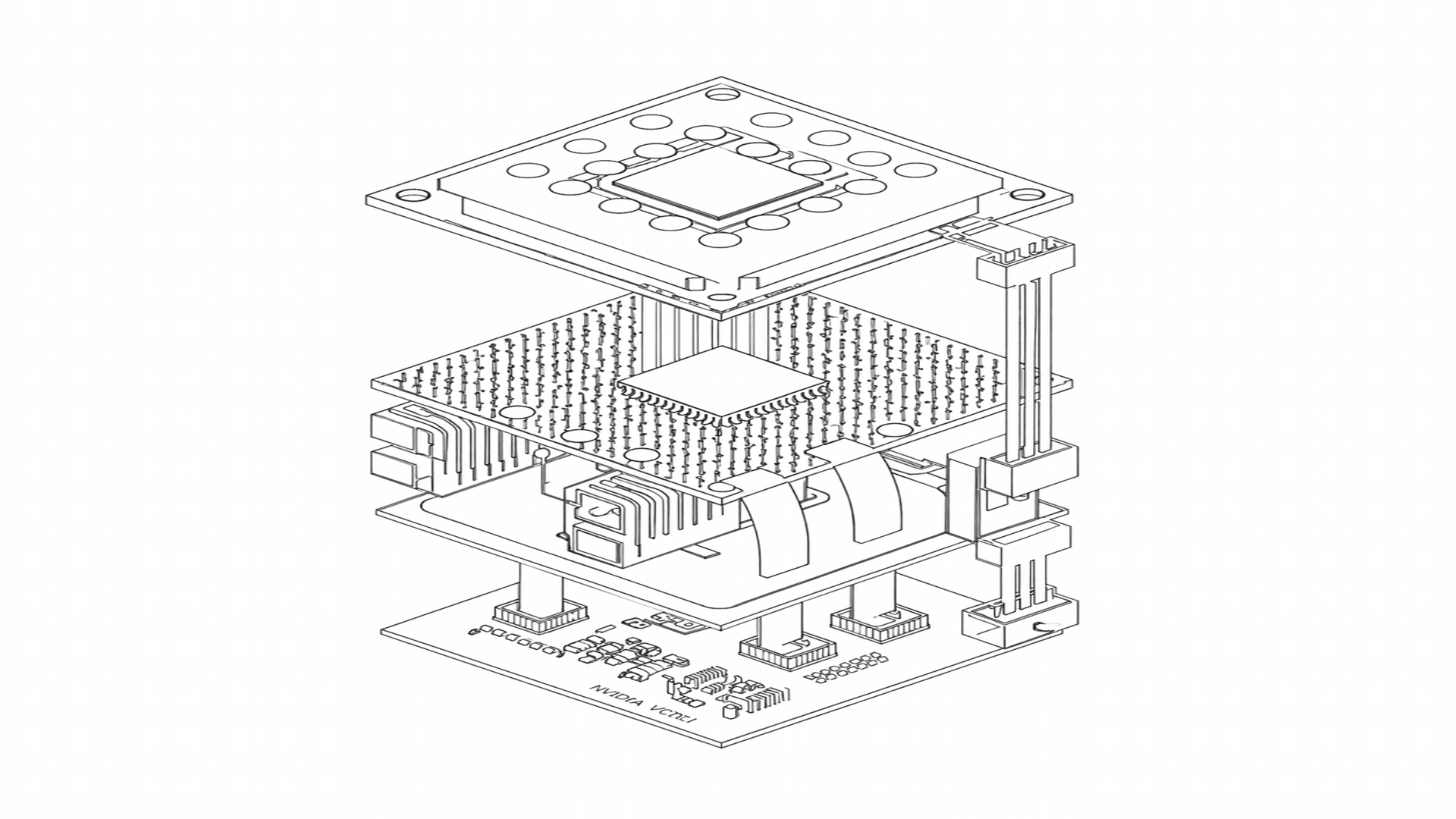
In modern vehicles, one battery management system is under constant pressure all the time. If we compare it with other electronics that are present in motor vehicles, we can clearly see a major difference; they are turned off when you switch off the ignition, but that’s not the case with the BMS, because it keeps on monitoring cell voltages, tracking temperatures, and keeping an eye on all the safety protocols 24x7. This constant operation, when combined with a harsh environment, poses a unique challenge for power management.
As a result, you have to be quiet when it comes to selecting the component for your BMS power architecture, as it can directly hit your efficiency metrics on the datasheet. In addition to this, these components are also responsible for your functional safety. Today, with this blog, we are going to find out methods using which you can prevent the overheating of the battery management system. Along with this, we are also going to provide you with reasons as to why overheating of the battery management system takes place.
The Unsung Hero of Your Battery Pack
If you ask any of the EV engineers about how their BMS works, they are likely going to mention state-of-charge algorithms in the conversation, along with cell balancing strategies and thermal modelling. But there is one component that sits at the very heart of BMS, and even though it is a pretty important component, it often gets neglected. The component is called System Basis Chip (SBC).
Speaking of SBC, you can consider them as a life-support system when your microcontroller is busy with the calculations of cell voltages and managing contractors. It is the SBC that is doing the hard work of providing rock-solid power, watching for uncertain failures, and ensuring that all the safety features will work when the system does fail.
Today, we are dissecting three leading ASIL D-capable SBCs for high-voltage BMS applications: NXP's FS26, Infineon's TLF35584QVVS2, and Texas Instruments' TPS653852A-Q1.
Why Your BMS Is Different (And Why It Matters)
Before we dive into the chips, let us acknowledge what makes a BMS unique:
It never truly sleeps: Your BMS is always on, monitoring cells, watching temperatures, waiting for a wake-up signal. Every milliwatt of parasitic drain chips away at your 12 V auxiliary battery.
It lives in thermal hell: Sealed enclosures, proximity to high-voltage battery packs, under-hood or under-seat mounting: your BMS does not have the luxury of active cooling in most designs.
It must be bulletproof for years: Battery packs outlive most other vehicle components. Your SBC needs to maintain ASIL D integrity across thousands of charge cycles, temperature extremes, and electrical transients.
System Inefficiencies That Compound the Problem
Here is a list of multiple system-level factors that result in thermal challenges:
Thermal isolation: BMS modules in most of the cars are protected against moisture and contaminants, which results in convection cooling. What works on an open test bench becomes a thermal trap in production.
Close proximity to heat sources: The mounting location for these components is often pretty close to high-voltage battery packs, in addition to being under the hood. As a result, BMS has to keep itself running even when the temperature reaches 85°C, while it is also generating internal heat.
Continuous operation: Unlike most vehicle electronics, the BMS never gets a thermal break. That constant heat generation accelerates component aging and increases the likelihood of thermal runaway conditions.
Cumulative effects: Multiple inefficient components (power regulators, transceivers, monitoring ICs) each contributing a few hundred milliwatts of heat create compounding thermal management challenges that exceed simple heat sink solutions.
The Architecture That Changes Everything
Three Philosophies, Three Trade-offs
The fundamental difference between these three chips is how they convert your 12 V auxiliary battery voltage into the clean, stable power rails your BMS microcontroller needs.
NXP FS26: The Direct Buck Approach
The FS26 uses synchronous buck converters (3.7 to 6.35 V, up to 1.5 A) to directly generate the main power rails with minimal conversion stages. The strategic advantage: it includes an external boost controller (VBST) that activates only during cold-crank events, providing resilience when your 12 V auxiliary battery sags without adding continuous conversion losses.
During a cold-crank event (when your 12 V auxiliary battery can drop to around 3.2 V), the FS26's boost controller kicks in to maintain critical monitoring functions. This gives you the efficiency of direct buck conversion during normal operation, with cold-crank protection only when needed.
Infineon TLF35584: The Precision Multi-Rail Specialist
Infineon's approach: a serial step-down/step-up pre-regulator creates a stable intermediate voltage, which then feeds multiple ultra-precise LDO regulators. This architecture excels when you need numerous independent, low-noise rails for complex, high-performance MCUs with demanding ripple and PSRR requirements.
It is powerful, precise, and perfect for computational heavy-hitters, but that precision comes at a thermal cost. The pre-regulator requires at least 6 V to operate, meaning deep cold-crank scenarios require external battery protection or alternative power architectures.
Texas Instruments TPS653852A-Q1: The Integrated Powerhouse
TI uses a buck-boost pre-regulator to generate a stable intermediate rail (typically 6 V), which then supplies several LDOs for final regulation. This topology offers excellent protection against voltage transients and the widest operating range of the three, capable of sustaining operation down to approximately 2.3 V after initial wake-up, though requiring about 7 V for cold startup.
Here is the strategic differentiator: the TPS653852A-Q1 is the only device in this comparison with integrated CAN transceivers (3× high-speed, 3× low-speed channels), eliminating external transceiver costs and board space. However, like the Infineon, it relies on LDOs for high-current final stages, which impacts overall thermal efficiency.
Thermal Design Best Practices for Engineers
Start with Power Architecture Selection
The single most impactful thermal design decision happens during SBC selection. Choose an architecture that minimizes heat generation at the source rather than trying to manage excessive heat after the fact.
Key considerations:
1. Calculate worst-case power dissipation across your full operating range, not just typical conditions.
2. Model cumulative effects of all power-dissipating components in your enclosed space
3. Account for ambient temperature variations in your target vehicle installations
4. Consider long-term degradation and how efficiency might change over 15 years.
Thermal Simulation Before Prototyping
Modern thermal simulation tools can predict junction temperatures with remarkable accuracy, but only if you provide realistic operating scenarios.
Essential simulation parameters:
1. Actual enclosure geometry and materials (not idealized test fixtures)
2. Realistic airflow conditions (often near-zero in sealed BMS enclosures)
3. Proximity effects from adjacent heat sources (battery pack, power electronics)
4. Transient thermal events (rapid charging, cold-crank recovery)
5. Aged component characteristics (increased resistance, reduced efficiency)
PCB Layout Thermal Optimization
Even the most efficient SBC can suffer from poor thermal PCB design.
Critical layout practices:
1. Maximize copper area under power components for heat spreading.
2. Use thermal vias to conduct heat to internal ground planes (minimum 8-12 vias per high-power component)
3. Separate thermal zones so heat from one component does not elevate another's baseline temperature.
4. Position temperature sensors strategically to detect hotspots before they become critical
5. Account for solder mask thermal resistance (often overlooked but significant)
Design for Measurement and Monitoring
You cannot manage what you cannot measure. Production BMS designs should include provisions for thermal monitoring that extend beyond startup validation.
Implementation strategies:
1. Multiple temperature sensors at strategic locations (not just one ambient sensor)
2. Runtime thermal logging that can identify degradation trends over time
3. Thermal trip points that reduce power consumption or limit functionality before damage occurs
4. Diagnostic interfaces that allow field service technicians to assess thermal health
Validation Beyond the Datasheet
Component datasheets provide maximum junction temperatures, but the real question is: what temperature can your component sustain continuously over 15 years without unacceptable degradation?
Accelerated lifetime testing approaches:
1. Extended thermal cycling at elevated temperatures (beyond automotive qualification standards)
2. Combined stress testing (thermal + voltage + vibration simultaneously)
3. Degradation trending to identify when components begin drifting outside specification.
4. Margin validation to confirm your design maintains adequate safety margins even after aging
How to Choose an Efficient SBC for EVs
Define Your Non-Negotiable Requirements
Before comparing datasheets, clearly articulate what your specific BMS application absolutely requires:
Power Requirements:
Maximum continuous current draw per rail
Peak transient current during cold-crank or rapid charging
Number of independent voltage rails needed
Noise and ripple requirements for analog monitoring circuits
Operating Environment:
Minimum/maximum input voltage range
Ambient temperature extremes in target vehicle installations
Cold-crank voltage sag characteristics
Transient voltage protection requirements
Communication Needs:
CAN, CAN FD, LIN, or other protocols required
Number of communication channels
Whether galvanic isolation is necessary
EMC and radiated emissions constraints
Safety and Reliability:
Required ASIL level (typically ASIL D for BMS)
Runtime diagnostic capabilities needed
Expected product lifetime and warranty period
Field serviceability requirements
Calculate Total System Efficiency
Do not trust marketing efficiency claims. Run the calculations for your specific operating point.
Create a realistic power budget:
1. List every power rail with actual expected load currents.
2. Calculate power dissipation for each conversion stage.
3. Account for quiescent current and self-consumption
4. Model efficiency across the input voltage range (not just nominal)
5. Include external components (CAN transceivers, sensors, etc.)
Compare architectures at your operating point, not ideal conditions. A device with "95% efficiency" at low load may drop to 70% efficiency at the high-current operating point your application requires.
Model the Thermal Impact
Efficiency percentages are abstractions. Convert them into heat that must be dissipated in your actual mechanical design.
Thermal modeling checklist:
1.Calculate total power dissipation in watts (not percentages)
2. Estimate junction-to-ambient thermal resistance for your PCB design.
3. Calculate the expected junction temperature in worst-case conditions.
4. Add margin for component aging and manufacturing variations.
5. Verify junction temperatures stay well below absolute maximum ratings.
A good rule of thumb: If your calculated steady-state junction temperature exceeds 100°C in worst-case ambient conditions, your thermal design has insufficient margin for long-term reliability.
Consider Total Cost of Ownership
The cheapest SBC on the BOM is not always the most economical choice when you factor in total system costs.
Hidden costs to consider:
External components: Does the SBC require additional transceivers, boost circuits, or thermal management?
PCB complexity: More complex architectures may require additional board layers or larger footprints
Validation and certification: Platform reuse and simplified diagnostics reduce engineering costs
Warranty and field failures: Better thermal management reduces long-term warranty exposure
Inventory and logistics: Pin-compatible families simplify supply chain management
Evaluate Long-Term Diagnostic Capability
Functional safety certification is just the beginning. Can you maintain and verify that safety integrity over 15 years in the field?
Critical diagnostic questions:
1. Can you test safety functions without removing the BMS from the vehicle?
2. Are diagnostic capabilities accessible via standard service tools?
3. Can you detect gradual degradation before it becomes a safety issue?
4. Does the architecture support field software updates for diagnostic improvements?
Platform Strategy and Scalability
Unless you are designing exactly one BMS for exactly one vehicle program, think about how your choice scales across multiple projects.
Scalability considerations:
Pin compatibility across device family for different feature sets
Common validation artifacts that can be reused across programs
Supplier relationship and long-term component availability
Regional variants and how architecture adapts to different market requirements
The ASIL D Feature You Might Be Overlooking
Here is a sobering truth about functional safety: achieving ASIL D certification is the easy part. Maintaining that level of safety over 15+ years? That is the real challenge. The silent killer in safety systems is the latent fault (when a safety monitor degrades or fails without anyone knowing).
Runtime Analog Self-Test: Different Approaches, Different Trade-offs
All three devices support analog built-in self-test (ABIST) capabilities as part of their ISO 26262 safety architecture. However, the implementation and accessibility of these self-tests differ in ways that impact long-term diagnostic strategy.
The NXP FS26 Advantage: ABIST2
The FS26 implements two distinct self-test modes:
ABIST1 runs automatically at startup, verifying all safety-critical analog functions before releasing system control
ABIST2 provides on-demand testing that can be triggered by the host MCU at any time during operation, without requiring system shutdown or complex external test circuitry
What This Means for Your BMS:
1. Proactive health monitoring: Run diagnostics during charging sessions or maintenance windows to catch degradation before it becomes dangerous
2. Post-stress verification: After a severe electrical transient, thermal event, or detected anomaly, verify that your safety mechanisms remain intact
3. Long-term confidence: Demonstrate that your BMS maintains ASIL D integrity across the vehicle's 15+ year lifespan
4. Field diagnostic capability: Enable service technicians to verify safety function health without specialized equipment
Both the TI TPS653852A-Q1 and Infineon TLF35584 include comprehensive analog and logic BIST routines during startup and support various forms of runtime diagnostics. The distinction is in implementation complexity: the FS26's ABIST2 provides a streamlined, MCU-triggered interface specifically designed for on-demand analog domain verification, whereas achieving similar diagnostic coverage with the other devices may require additional external logic or more complex MCU intervention.
It is the difference between pressing a button to run a self-test versus orchestrating a multi-step diagnostic sequence. Both get you there. One just makes it easier to do routinely.
Conclusion: Your Architecture Determines Destiny
In a Battery Management System, every wasted watt is not just an efficiency metric. It is a reliability risk. That heat has to go somewhere, and in the thermally constrained world of automotive electronics, "somewhere" usually means elevated junction temperatures, accelerated component aging, and higher warranty risk.
Protecting BMS is more than just taking care of electronics; it is considered to be vehicle safety, battery longevity, and the overall reliability of the vehicle. To be effective in prevention, one has to choose a robust system design that has proper component placement and has adequate space for thermal pass.
The BMS we have shown here will be operating in the safe thermal limits, not by chance, but by the ingenuity of its design, which helps in addressing overheating proactively rather than just being reactive. The thermal discipline of your BMS is considered to be a cornerstone of safe and sustainable electrification of your modern automotive system.
Frequently Asked Questions
1. What challenges come with SBC integration?
Balancing thermal performance, voltage compatibility, and EMC compliance in compact designs.
2. Who leads SBC innovation for BMS?
Companies like NXP, Infineon, TI, STMicroelectronics, and Renesas are key players.
3. How do SBCs support electric vehicles?
SBCs enable stable communication and power control across EV battery networks.


