Introduction
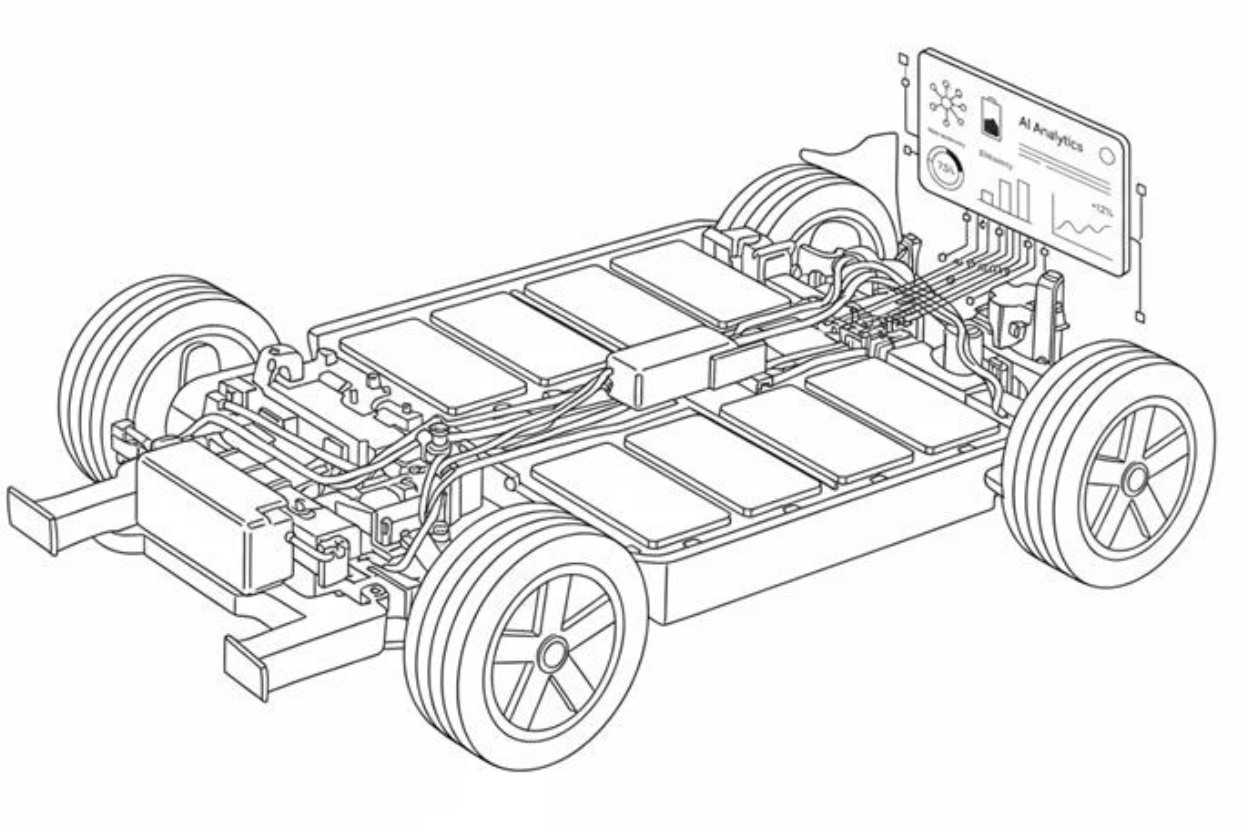
Battery Management Systems (BMS) are the backbone of modern energy storage systems and electric vehicle (EV) technology. As batteries become increasingly integral to sustainable transportation, renewable energy, and portable electronics, the technology ensuring their safe and reliable operation must advance in step. BMS, responsible for monitoring, protecting, and optimizing battery performance, is undergoing a significant transformation driven by advances in artificial intelligence (AI), integration with the Internet of Things (IoT), and new standards for safety and performance. This blog explores how these trends are shaping the future of BMS technology and their implications for industry and society.
Transportation accounts for approximately 27% of greenhouse gas emissions, with vehicle transportation responsible for more than 70% of that total. Energy storage solutions (ESS) and electric vehicles (EVs) have emerged as critical technologies to address this environmental challenge. The widespread adoption of EVs is a direct response to the need for reduced emissions and effective climate action.
At the core of these technologies is the Battery Management System (BMS), a crucial component that ensures the safety, longevity, and performance of EV battery packs. The integration of ESS with EVs creates opportunities for more efficient energy management. The combined evolution of EVs and ESS, particularly as BMS technology advances, is transforming the transportation landscape.
The development of intelligent BMS is essential for accurately estimating remaining useful life, state of energy, state of charge, and state of health, while also managing temperature and diagnosing faults. When combined with IoT technologies, these energy storage solutions achieve higher levels of automation and intelligence. This integration enables predictive maintenance, allowing potential issues to be detected early and preventing costly breakdowns.
This article examines how AI is revolutionizing BMS technology for improved EV battery safety, highlighting the latest advancements expected to shape the industry by 2025.
AI Integration in BMS for EVs
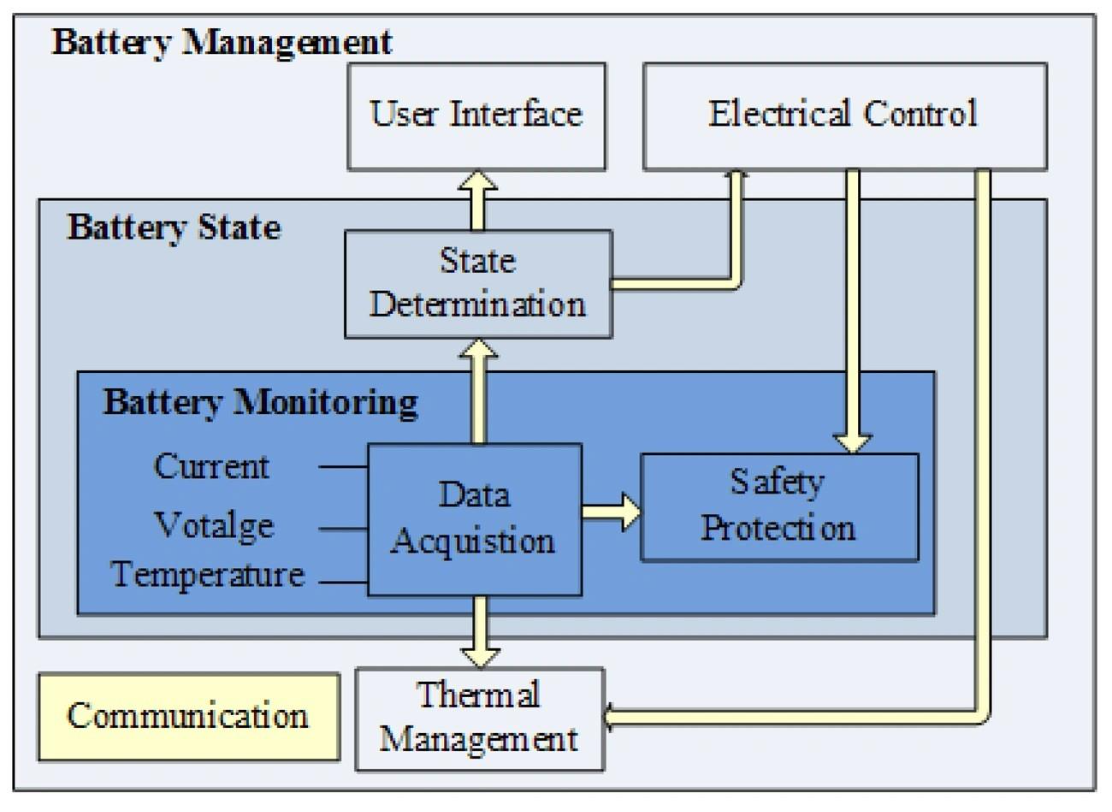
Image Source: MDPI
Battery Management Systems in electric vehicles require precise monitoring and control mechanisms to ensure optimal performance and safety. AI has become a powerful tool for enhancing these capabilities, offering significant advantages over conventional methods through data-driven approaches.
Real-time SOC and SOH Estimation using AI
State of Charge (SOC) and State of Health (SOH) estimations are fundamental functions of any BMS. Traditional methods often struggle with accuracy under dynamic conditions. Machine learning approaches have gained prominence for their ability to handle complex, nonlinear relationships between battery parameters.
Random Forest Regression (RFR) algorithms have demonstrated excellent performance in SOC estimation by processing terminal voltage and load current data, providing accuracy that surpasses traditional methods [1]. Similarly, neural networks trained with model-based datasets have shown comparable accuracy to those trained with experimental data, significantly reducing the need for extensive experimental campaigns [2].
For SOH estimation, which is crucial for assessing battery reliability and safety, various machine learning techniques have been employed. Long Short-Term Memory (LSTM) networks and Random Forest methods effectively integrate broad system features into SOH prediction. XGBoost has also been utilized as an advanced data analysis method to improve SOH prediction accuracy[3]. The Random Forest regressor is often preferred for SOH estimation, frequently yielding superior results—even outperforming deep neural networks, especially when the available training dataset is limited [3].
Remaining Useful Life (RUL) Prediction with Recurrent Models
RUL prediction is essential for assessing how many more charging and discharging cycles a battery can undergo before becoming unusable. Recurrent Neural Networks (RNNs) and their variants are particularly well-suited for this task due to their ability to process sequential data.
Multiple experiments comparing RNN variants for RUL prediction have shown that LSTM models consistently achieve lower root mean square errors (RMSE) compared to Bidirectional LSTM (BiLSTM), Gated Recurrent Units (GRU), and Bidirectional GRU (BiGRU) [4]. In one study, LSTM achieved an RMSE as low as 0.0123 in training [4].
Hybrid approaches combining Convolutional Neural Networks (CNN) with recurrent models have further enhanced prediction accuracy. A CNN-BiGRU model, which uses convolutional networks to extract latent features of battery health factors followed by bidirectional gated recurrent units, has shown superior performance in predicting RUL [5]. Additionally, a novel approach combining bat-based optimization with CNN models improved the accuracy of particle filter-based RUL prediction techniques, resulting in an RMSE of 0.00656015, mean absolute error (MAE) of 0.00439, and R² value of 0.998712 [6].
Battery Fault Detection using Anomaly Detection Algorithms
Early detection of battery faults is critical for preventing safety incidents in EVs and ESS. Machine learning-based anomaly detection offers advantages over traditional methods in identifying various types of battery faults.
Several algorithms have shown excellent performance in fault detection. Random Forest and K-Nearest Neighbor (KNN) algorithms outperform other techniques in terms of accuracy and precision for lithium-ion battery fault diagnosis [7]. Isolation Forest algorithms also provide effective anomaly detection capabilities for battery systems [8].
Advanced deep learning approaches include Transformer models that apply self-attention techniques to capture long-term dependencies within battery time-series data, enabling more accurate fault identification across extensive datasets[9]. A Transformer-Generative Adversarial Network (Trans-GAN) model has been developed to reconstruct voltage dynamics and detect anomalies in fluctuating real-world scenarios [8].
Different fault types require specific detection approaches. For instance, LSTM and Transformer models are effective for detecting overcharge conditions, while CNN and 3D-CNN are better suited for identifying thermal runaway through localized temperature spike patterns [9]. This specialized approach ensures that ESS maintain optimal safety profiles under varying operational conditions.
Deep Learning Models Enhancing Battery Safety
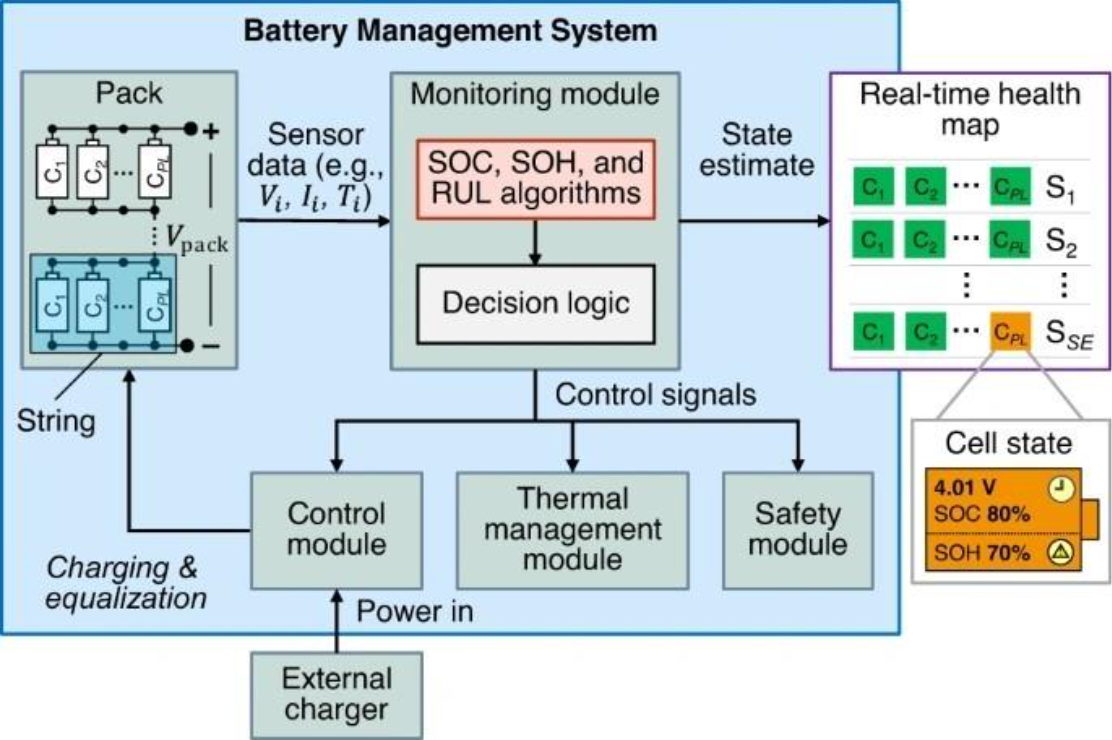
Image Source: Nature
Deep learning technologies represent significant advancements in ensuring the safety and reliability of lithium-ion batteries used in EVs and ESS. These sophisticated models process vast amounts of battery operational data to predict potential failures and optimize performance.
LSTM Networks for Thermal Runaway Prediction
Thermal runaway, a catastrophic failure mode in lithium-ion batteries, necessitates advanced prediction methods for prevention. Long Short-Term Memory (LSTM) networks have emerged as powerful tools for this critical safety function. Researchers have successfully utilized LSTM recurrent neural networks to predict surface temperature of battery cells for thermal fault diagnosis across multiple battery types [10].
These networks excel at capturing long-term dependencies in sequential data, making them ideally suited for battery temperature monitoring. One innovative approach integrates LSTM neural networks with convolutional networks to enhance battery abnormal heat calculation models, significantly improving the accuracy of single battery temperature prediction [10].
For ESS in EVs, temperature monitoring is a fundamental safety measure. LSTM models have demonstrated remarkable capabilities in estimating both State of Charge and average temperature states, with root mean square errors typically around 2% for SOC and 1.2K for average temperature [11]. These models maintain excellent accuracy without requiring extensive training and testing times.
CNN-based Pattern Recognition in Battery Degradation
Convolutional Neural Networks (CNNs) offer unique advantages in identifying complex patterns in battery degradation data. A novel approach representing battery data as images leverages established CNN architectures to diagnose degradation patterns with exceptional precision. This method has proven more accurate than current methodologies, with Root Mean Squaredaround Errors 2% on average compared to between 2.64% to 7.27% for other state-of-the-art algorithms [12].
Furthermore, CNNs effectively detect and classify failures using:
Battery thermal images for hotspot identification
Voltage/current patterns indicating internal damage
Degradation signature recognition across cell chemistries [12]
For ESS requiring robust reliability, hybrid CNN-LSTM architectures extract spatial features from multi-sensor time-series data, with the CNN component processing spatial patterns and the LSTM capturing temporal dependencies [13]. This combination enhances prediction accuracy of battery health states, enabling precise classification into distinct degradation categories.
GRU vs LSTM: Accuracy in SOH Estimation
Gated Recurrent Unit (GRU) networks and LSTM models represent two leading architectures for battery State of Health estimation. Comparative studies evaluating LSTM, RNN, GRU, and hybrid LSTM-GRU models reveal notable performance differences. The GRU model achieved the highest performance with an R² score of 0.9577 in one comprehensive study [14].
Root Mean Square Error (RMSE) values illustrate the relative performance: LSTM (0.019), RNN (0.023), GRU (0.017), and hybrid LSTM-GRU (0.019) [14]. These findings demonstrate the superior accuracy of GRU models for SOH estimation in lithium-ion batteries used in EVs and ESS.
Advanced implementations now integrate Genetic Algorithm optimization with Temporal Convolutional Networks, GRU, and Wavelet Neural Networks to assess SOH with even greater precision. This sophisticated approach has reduced average estimation error to less than 1% [15], offering valuable support for battery health management in both electric vehicles and energy storage solutions.
Optimization Algorithms for Safer BMS Decisions
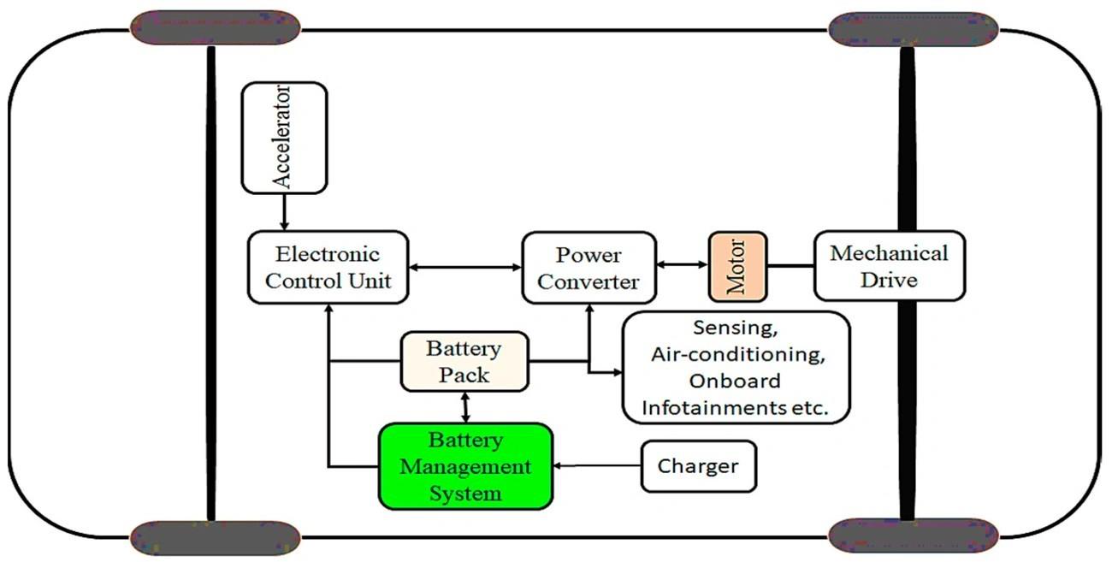
Image Source: MDPI
Optimization algorithms have become essential components in modern Battery Management Systems, enabling more precise and safer operations in EVs and ESS. Unlike traditional methods, these algorithms can navigate complex solution spaces to find optimal parameters across multiple objectives.
Genetic Algorithm (GA) for Charge Balancing
Genetic Algorithms excel in charge balancing applications due to their superior exploration capabilities within large search spaces. When applied to State of Charge (SOC) estimation, GA-based structures combined with multivariate linear regression can identify representative load-related variables that minimize root mean squared error. One implementation achieved approximately 95.5% accuracy in SOC estimation [16], making it a reliable diagnostic tool for the automotive industry.
GA's strength lies in its ability to prevent stagnation through mutation probability (typically set at 25% [16]) and efficient selection of chromosomes through techniques like Roulette Wheel. For charge balancing in ESS, GA's multi-objective optimization capabilities allow it to simultaneously optimize multiple parameters while maintaining balanced performance across the battery pack.
Particle Swarm Optimization (PSO) in Thermal Management
PSO has proven highly effective for thermal management in EVs and ESS. When applied to both energy management systems (EMS) and thermal management systems (TMS) in fuel cell/battery electric vehicles, PSO-based control strategies delivered impressive results:
Energy consumption improvements of 12.33% and 24.19% compared to rule-based controls under NEDC and WLTP driving cycles [17]
Temperature rise-time improvements of 11.55% and 1.94% [17]
Average temperature error reductions of 80.73% and 81.12% [17]
For thermal management, PSO optimizes coolant mass flow rates and flow rate ratios between energy sources. This approach shortens the low-efficiency temperature period during initial startup of EVs while maintaining optimal temperature zones for both fuel cells and batteries [1].
Whale Optimization Algorithm (WOA) for SOC Estimation
The Whale Optimization Algorithm offers distinct advantages for SOC estimation in lithium-ion batteries used in EVs and ESS. Unlike other optimization techniques, WOA employs random or optimal search agents to imitate hunting behavior and spirals to replicate bubble net attack skills of humpback whales [2]. his unique approach grants WOA faster convergence, higher efficiency, and fewer coefficients than competing algorithms.
When optimizing Multi-Kernel Relevance Vector Machine (MKRVM) parameters for SOC estimation, WOA demonstrated superior performance compared to both Genetic Algorithm and Simulated Annealing approaches [2]. Improved versions like IWOA-LSTM (Improved Whale Optimization Algorithm with Long Short-Term Memory) incorporate enhancements such as Gaussian chaotic mapping, nonlinear weight updates, and Lévy flight mechanisms to deliver even greater precision in SOC estimation across varying temperature conditions [18].
Hybrid AI Models and Their Role in ESS Energy Storage Systems
Hybrid AI models combine complementary algorithms to achieve superior performance in electric vehicle battery management. These innovative approaches integrate multiple techniques to overcome the limitations of individual models.
Combining SVM and RF for Multi-parameter Estimation
Support Vector Machines (SVM) and Random Forest (RF) algorithms, when strategically combined, create powerful estimation tools for battery systems. Neural networks are the most popular ML method (32.55%) in recent PV parameter estimation studies, followed by random vector functional link (13.95%) and support vector machine (9.30%) [19]. Hybrid models leverage RF's classification capabilities alongside SVM's strength in handling high-dimensional data, enhancing the accuracy of critical parameters like SOC and SOH. Studies applying both SVM and RF for defect detection have successfully constructed models that locate defects and recognize depth after feature selection [20].
AI-Driven ESS Energy Storage Solutions for EVs
The hybrid AI-based battery management system (HAI-BMS) addresses complex EV battery management challenges by combining conventional processes with neural networks and reinforcement learning algorithms [21]. This approach enhances battery performance, lifespan, and vehicle efficiency [21]. Another notable innovation is a hybrid model integrating Long Short-Term Memory networks, Feedforward Neural Networks, and Random Forest algorithms to estimate EV battery capacity under load conditions [3]. his combination not only predicts remaining capacity accurately but also determines whether batteries require replacement or recharging [3]. Experimental evaluations confirm that hybrid approaches significantly outperform standalone models in accuracy and reliability [3].
Integration of ML with ESS for Predictive Maintenance
Predictive maintenance is a pivotal application of machine learning in energy storage systems. AI-driven maintenance leverages algorithms to forecast failures, optimize maintenance schedules, and enhance overall system performance [22]. These advanced models monitor system health, predict failures preemptively, and substantially reduce downtime [22]. Through systematic implementation, ML models like decision trees, support vector machines, and neural networks analyze operational data from ESS to learn patterns leading to component failures [23]. These models predict remaining useful life (RUL) of various components based on temperature, voltage, current, and operational cycles [23]. AI-based predictive maintenance significantly lowers operational costs while reducing unexpected failure risks [22].
Challenges in Real-Time ML Deployment for BMS
Despite the promising advancements in machine learning for BMS applications, several critical challenges remain for real-world implementation in EVs and ESS.
Data Quality and Sensor Noise in EV Environments
The gap between laboratory testing and actual battery usage creates significant obstacles for AI models. Studies reveal that seasonality-dependent temperature heavily affects performance indicators in field data [24]. In addition, sensor failures and inaccurate measurements commonly occur throughout battery operation [6]. These inaccuracies stem primarily from manufacturing defects and poor operating conditions [6]. Electric vehicles create particularly challenging environments with electrical noise from inverters and transformers inducing current on sensor wires [5]. Traditional negative temperature coefficient thermistors remain vulnerable to electromagnetic interference, which can cause self-heating and produce misleading data [5].
Hardware Constraints in Embedded ML Systems
Resource limitations present fundamental barriers to ML deployment:
Computational power: Many sophisticated ML algorithms require processing capabilities exceeding what compact BMS units can provide [4]
Memory restrictions: Limited storage hampers model complexity and data handling [25]
Energy consumption: Power-intensive algorithms may drain battery resources [26]
Deploying ML on embedded systems involves significant development costs, including model optimization through quantization and pruning for hardware constraints [26].
Cybersecurity Risks in Connected BMS Platforms
Connected BMS platforms face mounting security threats. Researchers identified vulnerabilities allowing attackers to remotely alter EV battery performance, causing system failures and overheating risks [27]. Likewise, attacks targeting EVs and charging stations increased by 225% between 2018-2021 [27]. Consequently, cybersecurity measures become essential as BMS components increasingly interconnect with external networks [28].
Conclusion
Machine learning continues to transform Battery Management Systems for electric vehicles and energy storage solutions as we approach 2025. The integration of advanced algorithms has significantly enhanced real-time monitoring capabilities, improving overall safety and performance. Random Forest Regression and neural networks now deliver impressive accuracy in SOC and SOH estimation, while recurrent models like LSTM networks excel at predicting Remaining Useful Life with remarkable precision.
Battery safety has benefited from anomaly detection algorithms that identify potential failures before they become dangerous. Algorithms such as Random Forest, K-Nearest Neighbor, and Isolation Forest have demonstrated excellent performance in fault diagnosis. Deep learning approaches, particularly LSTM networks for thermal runaway prediction and CNN-based pattern recognition, offer unprecedented accuracy in monitoring battery health.
Optimization algorithms represent another critical advancement for safer BMS operations. Genetic Algorithms achieve superior charge balancing, while Particle Swarm Optimization excels in thermal management tasks. The Whale Optimization Algorithm has proven especially effective for SOC estimation across varying conditions.
Hybrid models that combine complementary AI techniques address complex challenges through their enhanced capabilities. These sophisticated systems support predictive maintenance strategies that minimize downtime and extend battery life. However, several challenges remain regarding real-world implementation. Data quality issues, sensor noise, hardware constraints, and cybersecurity risks present significant hurdles that researchers must overcome.
The evolution of ML-enhanced BMS technology will likely accelerate as electric vehicles become increasingly mainstream. Future developments will focus on addressing current limitations while further improving accuracy and reliability. These intelligent systems will play a crucial role in enabling widespread EV adoption by ensuring batteries remain safe, efficient, and long-lasting. The ongoing transformation of BMS through machine learning represents a fundamental step toward sustainable transportation and energy systems.
Key Takeaways
Machine learning is revolutionizing Battery Management Systems in electric vehicles, delivering unprecedented accuracy and safety improvements that will define the industry by 2025.
ML algorithms achieve 95%+ accuracy in battery monitoring: Random Forest and LSTM networks deliver precise SOC/SOH estimation and thermal runaway prediction with RMSE as low as 0.0123.
Hybrid AI models outperform standalone systems: Combining CNN-LSTM architectures and optimization algorithms like Genetic Algorithm and Particle Swarm Optimization enhances charge balancing and thermal management by up to 24%.
Predictive maintenance prevents costly failures: AI-driven anomaly detection using Random Forest and Isolation Forest algorithms identifies battery faults early, reducing unexpected breakdowns and extending battery life.
Real-world deployment faces critical challenges: Data quality issues, hardware constraints, and cybersecurity risks require solutions before widespread ML-BMS implementation in EVs and energy storage systems.
Deep learning enables proactive safety measures: LSTM networks predict thermal runaway while CNN models recognize degradation patterns with 2% RMSE, significantly improving EV battery safety standards.
The convergence of machine learning and battery management represents a pivotal advancement toward safer, more efficient electric vehicles and energy storage solutions, though addressing implementation challenges remains crucial for industry-wide adoption.
References
[4] - AI Impact Analysis on Battery Management System (BMS) Industry
[5] - Thermal runaway early detection: critical sensors and connections for safe battery management
[7] - Data Driven Techniques for Fault Detection in Lithium Ion Battery
[9] - Fault Detection of Li–Ion Batteries in Electric Vehicles: A Comprehensive Review
[11] - ML for Lithium-Ion Battery Thermal Runaway Prevention in EVs
[12] - Li-ion battery degradation modes diagnosis via Convolutional Neural Networks
[14] - A Deep Learning Approach for State of Health Estimation in Lithium-ion Batteries
[15] - Lithium-Ion Batteries state of health estimation based on optimized TCN-GRU-WNN
[19] - A systematic review on predicting PV system parameters using machine learning
[24] - Analysis and key findings from real-world electric vehicle field data
[25] - Ultimate Guide to Machine Learning for Embedded Systems
[27] - Cybersecurity in Battery Management System
[28] - Cybersecurity Risk Analysis of Electric Vehicles Charging Stations
Frequently Asked Questions:
1. What is a Battery Management System (BMS) in electric vehicles?
A BMS is the control unit responsible for monitoring, protecting, and optimizing the performance of EV battery packs. It manages parameters like State of Charge (SOC), State of Health (SOH), temperature, and fault detection to ensure safe and efficient operation.
2. How is AI improving BMS technology?
AI enables more accurate SOC/SOH estimation, predicts remaining battery life (RUL), detects anomalies early, and optimizes charge balancing and thermal management. Machine learning models handle complex, nonlinear battery data better than traditional algorithms.
3. Why is accurate SOC and SOH estimation important?
SOC estimation tells you how much usable charge remains, while SOH measures battery health and reliability. Accurate estimates prevent overcharging, deep discharging, and unexpected failures, extending battery life and improving safety.


