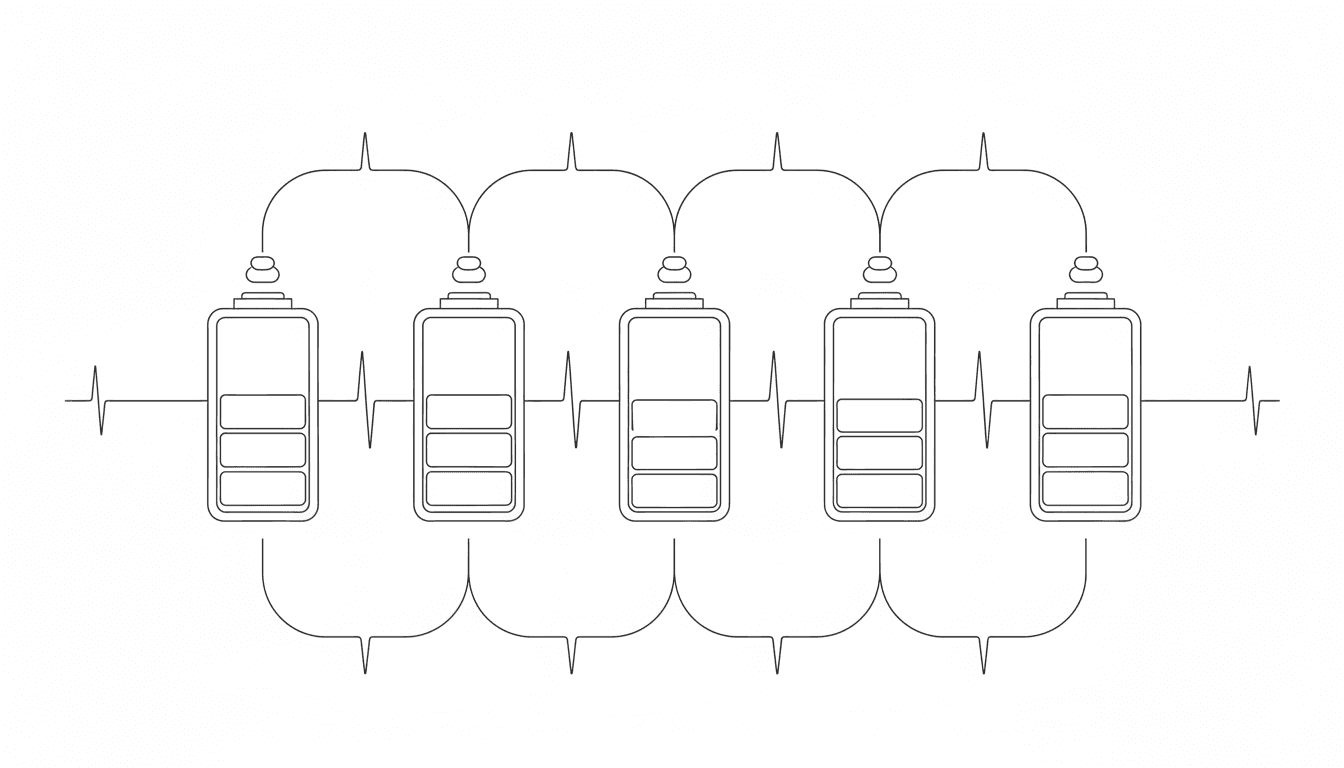
What is cell balancing?
Cell balancing is like making sure all batteries in a pack work together nicely. When you put many battery cells together to make a bigger battery pack, some cells might get stronger or weaker than others. Cell balancing helps keep all cells at the same power level.
In simple words, cell balancing makes sure no single cell gets too full or too empty compared to the others. This keeps your battery pack healthy and working well for a long time.
Why it matters
Battery balancing methods are very important for several reasons:
It keeps your battery pack safe. When cells are not balanced, some might get too hot or damaged. This can be dangerous and might even cause fires.
It helps your battery last longer. When all cells work together properly, the whole battery pack stays healthy for more years.
It gives you better performance. A balanced battery pack gives you more power and runs longer than an unbalanced one.
What is Passive Cell Balancing?
Passive balancing system is the simpler way to balance battery cells. It works by taking away extra energy from cells that have too much power. This method is called "passive" because it doesn't move energy around it just removes the extra energy.
How it works
A passive balancing system uses small parts called resistors. These resistors work like tiny heaters that burn off extra energy from cells that are too full.
Here's how it works step by step:
The system checks all cells to see which ones have more energy
It turns on resistors connected to the full cells
These resistors heat up and use the extra energy
The extra energy turns into heat and goes away
This continues until all cells have similar energy levels
The process is automatic and happens while you charge your battery. The battery management system watches all cells and decides when to turn the resistors on or off.
Pros and cons
Good things about passive balancing:
Passive balancing is very simple to build and understand, which makes it perfect for beginners. It costs much less money to make because it only needs basic parts like resistors and simple switches. The system doesn't break easily because it has fewer electronic parts that could go wrong.
It works really well for small battery packs where speed isn't important. When something does break, it's easy to fix because most people can understand how the simple parts work. This method has been used for many years in different devices, so engineers know it's reliable and safe to use.
Bad things about passive balancing:
The biggest problem is that passive balancing inefficiently uses energy by turning extra power into heat instead of using it. This makes the balancing process work very slowly, sometimes taking many hours to finish balancing all the cells properly. All this wasted energy also makes the battery pack get warmer, which isn't good for battery health.
It's not a good choice for big battery packs because the slow speed becomes a real problem. The system uses more electricity during charging because of all the energy waste. Also, passive balancing can't help cells that are too empty because it can only remove energy, not add it to weak cells.
What is Active Cell Balancing?
Active balancing system is a smarter way to balance battery cells. Instead of throwing away extra energy, it moves energy from full cells to empty cells. This method is called "active" because it actively moves energy around.
How it works
An active balancing system uses special electronic parts to move energy between cells. These parts include transformers, capacitors, and switches that work together like a smart energy-moving machine.
Here's the step-by-step process:
The system checks all cells to find which are full and which are empty
It uses electronic switches to connect full cells to empty cells
Special circuits move energy from full cells to empty cells
The energy moves through transformers or capacitors safely
This continues until all cells have balanced energy levels
The process is much faster than passive balancing and can happen even when you're not charging the battery.
Pros and cons
Good things about active balancing:
Active balancing saves energy by moving power from full cells to empty cells instead of wasting it as heat. This smart approach makes the balancing process work much faster than passive methods, often finishing in less than an hour. The system creates much less heat because it's not burning off energy, which keeps the battery pack cooler and safer.
It works great for big battery packs where passive balancing would be too inefficient and time consuming. Active balancing can help both overfilled and empty cells by moving energy around as needed. The overall efficiency is much better, which means you get more power and longer runtime from your battery pack.
Bad things about active balancing:
The main problem is that active balancing systems cost much more money to build because they need expensive electronic parts. These systems are very complex with many different components like transformers and smart controllers, which makes them harder to understand. All these complex parts mean there are more things that can break or go wrong.
When something does break, it's much harder to fix because you need special knowledge and tools to work on the advanced electronics. The system needs more space inside the battery pack to fit all the extra components. It also requires more complex computer programs to control all the smart features, which adds another layer of complexity.
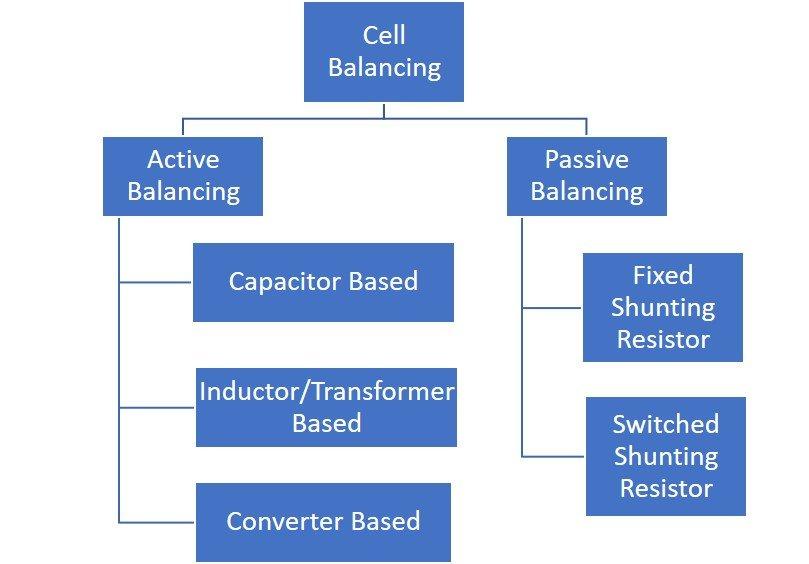
Source: Active and Passive Cell Balancing Topologies
Key Differences Between Active and Passive Balancing
Energy Utilization
The biggest difference is how they handle extra energy. Passive balancing wastes energy by turning it into heat. Active balancing saves energy by moving it to cells that need it.
Think of passive balancing like throwing away extra food, while active balancing is like sharing extra food with hungry people.
Efficiency
Cell balancing efficiency is much better with active systems. Active balancing can save up to 5-10% more energy compared to passive balancing. This means your battery lasts longer between charges.
Passive balancing typically wastes 2-5% of energy during balancing. Active balancing wastes almost no energy and sometimes even helps charge empty cells faster.
Heat Generation
Passive balancing makes more heat because it burns off extra energy through resistors. This heat can make the battery pack warmer and might need cooling fans.
Active balancing makes much less heat because it moves energy instead of wasting it. This keeps the battery pack cooler and safer.
Circuit Complexity
Passive systems are much simpler. They only need resistors and simple switches. Anyone can understand how they work.
Active systems are more complex. They need transformers, capacitors, smart controllers, and special software. They're like comparing a simple light switch to a computer.
Cost
Passive balancing costs less money. The parts are cheap and easy to find. Building a passive system might cost $10-20 per battery pack.
Active balancing costs more money. The electronic parts are expensive and need skilled workers to build. An active system might cost $50-200 per battery pack.
Balancing Speed
Passive balancing works slowly. It might take several hours to balance a battery pack during charging.
Active balancing works much faster. It can balance a battery pack in 30 minutes to 2 hours, and it can work even when not charging.
Scalability
Passive balancing works well for small battery packs with 4-12 cells. For bigger packs, it becomes slow and wasteful.
Active balancing works great for both small and large battery packs. It can handle packs with hundreds of cells efficiently.
Battery Lifespan
Both methods help batteries last longer, but active balancing is better. Since it creates less heat and balances faster, batteries stay healthier longer.
Passive balancing can extend battery life by 20-30%. Active balancing can extend battery life by 40-60%.
Power Applications
Passive balancing works fine for low-power devices like small gadgets, tools, and backup power systems.
Active balancing is better for high-power applications like electric vehicle batteries, large energy storage systems, and industrial equipment.
Maintenance Needs
Passive systems need less maintenance because they're simpler. If something breaks, it's usually easy to fix.
Active systems need more careful maintenance. The complex parts might need special tools and knowledge to fix.
Which Method is Right for Your Application?
Small-scale applications
For small battery packs and simple devices, passive balancing system is usually the best choice. Here are some examples:
Good for passive balancing:
Passive balancing works perfectly for flashlights and small power tools because these devices don't need fast charging or perfect efficiency. It's ideal for backup power systems in homes where the battery sits unused most of the time and only works during power outages. Small solar power systems for gardens or sheds can use passive balancing because they charge slowly throughout the day.
Portable speakers and radios benefit from passive balancing because these devices are simple and users want them to be affordable and reliable. Emergency lighting systems in buildings work well with passive balancing since they rarely get used and need to be very dependable. Simple electric bikes that don't need high performance can save money by using passive balancing systems.
These applications don't need fast balancing and want to keep costs low. The slower speed and energy waste don't matter much in small systems.
Large-scale or high-performance systems
For big battery packs and demanding applications, an active balancing system is usually better. Here are some examples:
Good for active balancing:
Electric vehicle batteries need active balancing because cars require fast charging and maximum driving range from their expensive battery packs. Large solar and wind energy storage systems use active balancing because they handle lots of energy every day and efficiency really matters for saving money. Industrial equipment and machinery benefit from active balancing because they need reliable power and can't afford downtime from battery problems.
Data center backup power systems use active balancing because they protect valuable computer equipment and need to work perfectly when the main power fails. Grid-scale energy storage systems that help power entire neighborhoods require active balancing because they handle massive amounts of energy. High-performance electric boats and planes need active balancing because weight and efficiency are critical for good performance, and these applications can afford the higher cost for better results.
These applications need fast balancing, high efficiency, and can afford the higher cost.
Factors to consider
Cost
Think about your budget for both buying and running the system. Passive balancing costs less upfront but might waste more energy over time. Active balancing costs more upfront but saves energy later.
For a 10-year period:
Passive system: Lower initial cost + higher energy waste
Active system: Higher initial cost + lower energy waste
Calculate which option saves more money over the life of your battery pack.
Longevity
How long do you need your battery to last? If you want maximum battery life and can afford the higher cost, choose active balancing. If you're okay with shorter battery life to save money, passive balancing might work.
Active balancing typically helps batteries last 2-3 times longer than passive balancing.
Complexity
Do you have people who can maintain complex systems? If your team prefers simple solutions that anyone can fix, choose passive balancing. If you have technical experts and want the best performance, choose active balancing.
Conclusion
Both active and passive cell balancing have their place in lithium battery management. The right choice depends on your specific needs, budget, and application.
Choose passive balancing if you want lower upfront costs and don't mind slower performance and some energy waste. This method works best when you need simple systems that are easy to maintain and repair without special training. It's perfect for small battery packs where the slower balancing speed won't cause problems. Passive balancing is also the right choice for applications where high efficiency is not critical and you want to keep things simple and affordable.
Choose active balancing if you want maximum battery pack safety and the longest possible lifespan from your investment. This method gives you high efficiency and fast balancing, which means better performance and less wasted energy over time. It's essential for large or high-performance systems where every bit of efficiency matters. Active balancing is worth the extra cost when energy savings will add up to significant money over the years of operation.
Remember that battery balancing is essential for safety and performance regardless of which method you choose. A good balancing circuit design will keep your batteries healthy and your applications running smoothly.
The future trend is moving toward active balancing as costs come down and technology improves. However, passive balancing will always have a place in simple, cost-sensitive applications.
Frequently Asked Questions:
1. What is cell balancing in batteries?
Cell balancing keeps all battery cells at the same energy level so they work together safely and efficiently.
2. Why do lithium-ion batteries need balancing?
Lithium batteries can become dangerous and die quickly if cells get too different from each other.
3. Can cell balancing extend battery life?
Yes, proper balancing can make batteries last 2-3 times longer than unbalanced batteries.
4. Is cell balancing required for all batteries?
Most multi-cell battery packs need balancing, but single-cell batteries don't need it.
5. Do EV batteries use active balancing?
Most modern electric vehicles use active balancing because they need high performance and efficiency.


