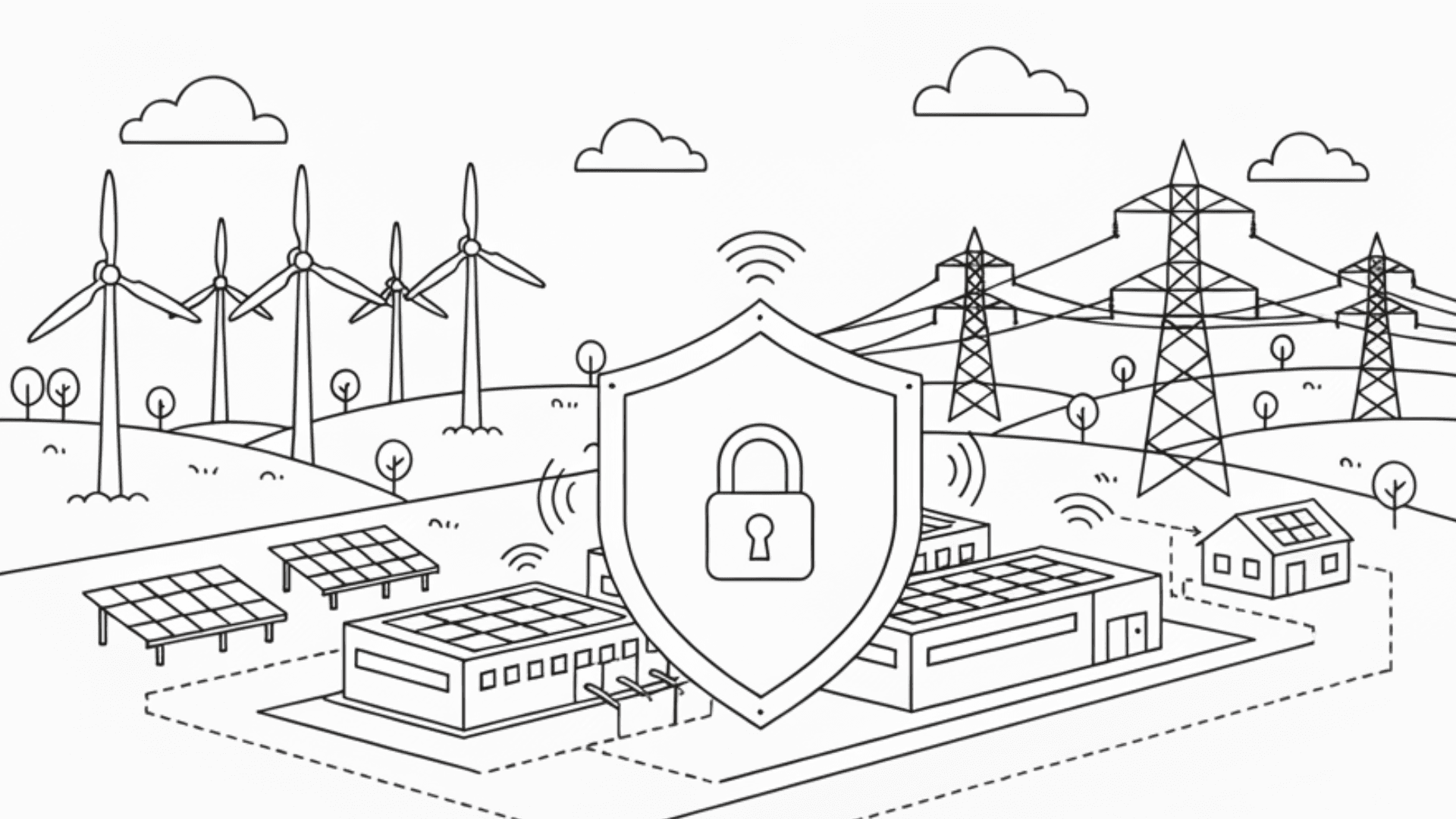
Smart battery systems represent a significant technological advancement—imagine your smartphone's battery scaled up exponentially and integrated with internet connectivity. These sophisticated systems perform crucial functions including storing renewable solar energy, supplying power to electric public transportation, and maintaining critical operations in medical facilities during power outages. Their advanced capabilities enable communication with other devices, weather-responsive operational adjustments, and intelligent decision-making regarding energy charging and discharge cycles.
Nevertheless, this internet connectivity introduces substantial security vulnerabilities. Just as cybercriminals can compromise email accounts or financial databases, these battery systems face similar threats. The critical distinction lies in the potential consequences: compromised battery infrastructure can precipitate widespread power outages, structural fires, and catastrophic explosions.
The December 2015 cyberattack on Ukraine's electrical grid exemplifies this threat, leaving 230,000 residents without power during severe winter weather. Similarly, the 2021 Colonial Pipeline incident resulted in extensive fuel supply disruptions throughout the Eastern United States. These incidents were not operational failures but intentional cyberattacks targeting essential energy infrastructure.
According to Department of Energy data, cyberattacks on energy storage systems increased by 300% during the 2020-2024 period. Research from the University of Oxford revealed that 70% of commercial battery systems contained at least one critical security vulnerability susceptible to exploitation. Given our growing reliance on renewable energy sources and electric vehicle technology, securing these systems has become as essential as protecting financial institutions and healthcare facilities.
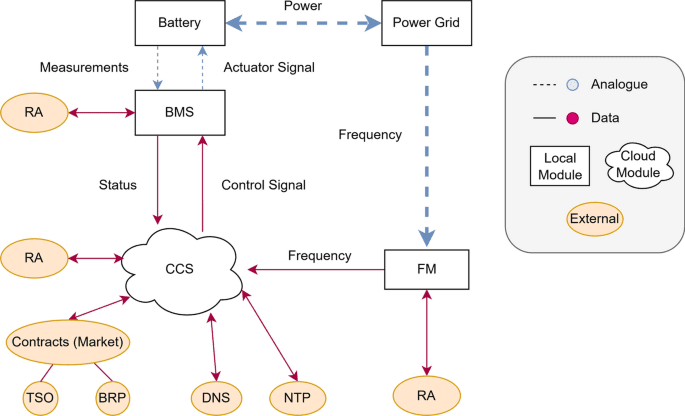
Source: Cyber threats of BESS
Common Cybersecurity Threats in Smart Battery Systems
Unauthorized Remote Access
Unauthorized remote access occurs when malicious actors gain control of battery systems without proper authorization. In 2019, Idaho National Laboratory researchers evaluated a commercial battery system utilized by utility providers and discovered that attackers could gain access using unchanged default passwords from initial installation. Within minutes, they successfully manipulated charging parameters, deactivated safety protocols, and induced overheating conditions.
In 2020, an Australian solar energy facility discovered that temporary maintenance credentials had been inadvertently left active and subsequently distributed on dark web platforms, creating vulnerability for anyone who obtained them.
Malware and Ransomware Attacks
Ransomware represents a form of malicious software that denies access to systems until a ransom payment is made. The Colonial Pipeline attack in May 2021 demonstrated the severe implications of such incidents. The organization paid $4.4 million in ransom, operations ceased for six days, and total economic damages exceeded $5 billion due to fuel supply disruptions and cascading effects.
In March 2023, a German battery manufacturing facility experienced a ransomware attack that encrypted their operational control systems. The attackers demanded cryptocurrency payment, forcing the facility to suspend operations for two weeks with estimated losses of 12 million euros. Additionally, the malware compromised battery testing systems, raising serious questions about the safety verification of previously manufactured units.
Data Breaches
In 2022, cybercriminals successfully extracted data from over 500,000 users of a European electric vehicle charging network. The compromised information included residential addresses, charging schedules indicating when users were away from home, financial payment details, and driving behavior patterns. This stolen data subsequently appeared for purchase on criminal marketplaces, facilitating identity theft and residential burglary planning.
Tesla experienced a significant breach in 2023 when former employees leaked 100 gigabytes of confidential information affecting 75,000 individuals, exposing proprietary battery technology details and customer service records.
Denial-of-Service Attacks
Denial-of-service attacks overwhelm systems with excessive fraudulent traffic, rendering legitimate operations impossible. During California's August 2020 heatwave, attackers targeted solar-plus-storage facilities during peak energy demand periods. These attacks prevented operators from monitoring battery performance and implementing optimal operational decisions. While investigators could not definitively establish that the attack directly caused rolling blackouts, it undoubtedly contributed to the crisis.
Firmware Tampering
Firmware constitutes the fundamental software that controls hardware components. In 2021, National Renewable Energy Laboratory researchers demonstrated how attackers could modify electric vehicle battery firmware to display inaccurate charge levels, disable temperature safety mechanisms, or initiate dangerous charging rates that could trigger fires.
A South Korean manufacturer discovered in 2022 that counterfeit battery controllers containing modified firmware had infiltrated their supply chain. The altered firmware deactivated safety features to artificially enhance battery performance, creating significant fire hazards. The company recalled over 50,000 units following multiple fire incidents.
Man-in-the-Middle Attacks
Man-in-the-middle attacks involve cybercriminals secretly intercepting communications between two legitimate parties. In 2020, researchers successfully demonstrated this vulnerability on electric vehicle charging stations by intercepting communications between vehicles and charging equipment. They manipulated charging processes, altered billing calculations, and injected commands capable of damaging batteries.
A Danish wind farm with integrated battery storage experienced this attack type in 2023 when cybercriminals positioned themselves between wind turbines and the battery system, manipulating data regarding available wind power. This resulted in improper charging and discharging cycles, diminishing efficiency and incurring financial penalties.
Phishing and Social Engineering
Phishing and social engineering attacks manipulate individuals into revealing access credentials. In 2022, employees at a battery company received fraudulent emails purporting to be from their IT department requesting login verification. Several employees entered their credentials on the counterfeit website, providing cybercriminals with access to internal systems and technical documentation valued at millions of dollars.
A more sophisticated 2023 attack involved cybercriminals researching a facility's organizational structure through LinkedIn and sending emails appearing to originate from the CEO, requesting urgent remote access for an auditor. The facility manager complied without proper verification, providing cybercriminals with three days of system access.
Supply Chain Attacks
The 2020 SolarWinds attack illustrated the devastating potential of supply chain compromises. Cybercriminals compromised software updates for network management tools utilized by thousands of organizations. When companies installed what appeared to be legitimate security updates, they actually deployed malware affecting at least 18,000 organizations.
In 2021, researchers identified that certain battery management chips manufactured in Asia contained hidden backdoors. These components were deployed globally in industrial battery systems. The backdoors would have enabled remote access to any system utilizing them. Discovery during testing prevented exploitation but necessitated expensive hardware replacements.
Insider Threats
In 2023, a California battery facility engineer deliberately disabled safety monitoring systems before resigning after being denied a promotion. The disabled systems remained undetected for two days until routine inspection revealed the sabotage. During this period, several hazardous conditions developed that could have caused substantial damage.
Tesla encountered an insider threat in 2018 when an employee inserted malicious code into manufacturing systems and transmitted confidential battery data to unknown recipients, purportedly to expose safety concerns.
IoT Device Exploitation
Temperature sensors in a widely-used battery management system were found to be vulnerable in 2022. These inexpensive sensors lacked any security features, allowing cybercriminals to transmit false temperature readings to the system. Since batteries depend on accurate temperature monitoring for safe operation, this vulnerability could deceive systems into dangerous operating conditions and potentially cause fires.
An Arizona solar installation was compromised in 2023 when cybercriminals breached a WiFi-connected weather station, using it as an entry point to access battery control systems. The simple weather monitoring device had not been considered in cybersecurity planning.
Risks and Impacts of Cyber Attacks
Power Disruptions
When battery systems fail, hospitals must switch to backup generators. A 2023 Singapore simulation revealed that attackers could disable hospital battery backup systems, providing only 30 minutes of generator fuel before life support equipment would fail.
Battery systems stabilize electrical grids by rapidly releasing or storing power. If attackers disable multiple facilities during peak demand, it could trigger cascading failures, causing blackouts that propagate from city to city like falling dominoes.
Financial Losses
The Colonial Pipeline attack incurred a $4.4 million ransom payment, but the total economic impact exceeded $5 billion. Airlines canceled flights, delivery companies couldn't fuel their vehicles, and workers missed employment opportunities.
A UK battery facility faced £2.3 million in penalties after a 2022 cyberattack took them offline during periods of high electricity prices. They forfeited revenue from power sales and incurred penalties for failing to meet contractual obligations.
Safety Hazards
Lithium-ion batteries store tremendous amounts of energy. When malfunctioning, they experience thermal runaway—a process where rising temperature causes additional heat generation, leading to fires that are extremely difficult to extinguish or explosions.
A 2019 Arizona battery facility explosion injured four firefighters. While not caused by cyberattack, it demonstrated the consequences when battery management systems fail to detect hazardous conditions. Researchers demonstrated in 2021 how attackers could remotely induce batteries to overheat and ignite within 15 minutes.
Critical Infrastructure Impact
Battery systems support power grids, water treatment facilities, hospitals, communication networks, and emergency services. The FBI and Department of Energy issued a 2022 warning that sophisticated threat actors were actively probing U.S. energy infrastructure, including battery facilities, seeking vulnerabilities to exploit during future conflicts.
If attackers coordinated simultaneous strikes against battery systems supporting critical infrastructure, the consequences could be catastrophic. Power grid failures could disable cell towers, preventing emergency communications. Hospital backup systems could fail during evacuations. Water treatment operations could cease, contaminating drinking water supplies. Traffic signals would fail, causing accidents and obstructing emergency vehicles.
Protection Strategies That Work
Strong Authentication and Encryption
Multi-factor authentication requires at least two forms of verification before granting access, typically combining something you know (password), something you possess (smartphone), and sometimes something you are (fingerprint). Microsoft reported that accounts utilizing this approach block 99.9% of automated attacks.
A Norwegian battery company implemented multi-factor authentication in 2021. The following year, they detected over 1,200 unauthorized access attempts, but every single attempt was blocked because attackers only possessed stolen passwords.
Encryption transforms data so only authorized parties can access it. Modern standards like AES-256 (used by the NSA for Top Secret information) and TLS 1.3 for network communications are virtually unbreakable with current technology.
Regular Software Updates and Patching
The 2017 WannaCry ransomware infected over 200,000 computers across 150 countries, causing billions in damages. However, organizations that applied a Microsoft security patch released two months earlier were completely protected.
Tesla regularly deploys over-the-air updates to vehicles. When researchers discovered a 2020 vulnerability allowing remote vehicle unlocking, Tesla developed, tested, and deployed a fix to their entire fleet within two weeks without requiring customers to visit service centers.
A German battery facility avoided a 2022 security incident by applying a critical patch within 48 hours of discovery. Two weeks later, that same vulnerability was being actively exploited across Europe, but the German facility remained protected.
Network Segmentation and Firewalls
Network segmentation divides networks into smaller, isolated sections. During a 2023 ransomware attack on a Spanish renewable energy company initiated through a phishing email, proper network segmentation prevented spread to battery control systems. The business network was encrypted and disabled, but power generation continued normally.
The U.S. Nuclear Regulatory Commission mandates strict network segmentation in nuclear facilities. Despite being high-value targets, no U.S. nuclear plant has experienced successful cyberattacks affecting operations, partially due to these requirements.
AI-Driven Anomaly Detection
Artificial intelligence learns normal operational patterns and alerts operators to unusual activities indicating potential cyberattacks. An Australian battery facility implemented AI monitoring in 2022. Within the first month, it detected unusual 2 AM network activity revealing that an attacker had compromised employee credentials and was extracting operational data during reconnaissance. Early detection prevented the attack before damage occurred.
Darktrace protected a 2021 renewable energy company when their AI detected a contractor's laptop scanning the network for vulnerabilities after connecting. Security personnel disconnected it before attacks could progress. Investigation revealed the laptop had been infected at a previous job site.
Employee Training and Awareness
A battery manufacturer reduced successful phishing attacks by 87% over two years through monthly security training and quarterly simulated phishing tests. Employees who failed simulations received additional training. Eventually, even sophisticated phishing attempts were reported within minutes.
French energy company EDF's 2020 security awareness program included training, simulated attacks, and gamification elements. In 2022, an employee reported a suspicious firmware update email to security. Investigation revealed a sophisticated phishing attempt targeting multiple European energy companies, preventing what could have been a major breach.
Future Outlook
AI and Blockchain Advancement
Next-generation AI will autonomously respond to threats within milliseconds without human intervention. Instead of alerting sleeping operators, future AI will detect attacks, isolate compromised systems, switch to backup controls, analyze attack scope, and deploy countermeasures before damage occurs.
Blockchain creates tamper-proof records of all system changes. For battery systems, it provides immutable audit trails showing exactly who accessed systems and what modifications they made. If someone attempts to hide activities by tampering with logs, blockchain immediately reveals the attempt.
Power Ledger utilizes blockchain for peer-to-peer energy trading and battery storage coordination in Australia and California. The blockchain ensures transactions are secure and cannot be fraudulently altered. It also secures firmware updates by verifying each update's authenticity before installation.
Industry Standards and Regulations
The European Union proposed 2023 regulations requiring all large-scale battery facilities to achieve IEC 62443 certification by 2026. Starting July 2024, all new vehicles sold in Europe must comply with UN Regulation 155, based on ISO 21434, meaning every electric vehicle battery must meet specific cybersecurity requirements.
In North America, NERC CIP standards for power grid security increasingly encompass battery storage. Violations carry serious penalties. In 2022, utility companies paid over $8 million in cybersecurity violation fines.
China announced a 2023 national strategy requiring facilities larger than 10 megawatt-hours to implement comprehensive cybersecurity, including regular penetration testing by government-certified firms. India followed with similar 2024 requirements.
Insurance companies are driving change as well. Lloyd's of London announced in 2023 they would no longer provide cybersecurity insurance for battery facilities that cannot demonstrate compliance with recognized standards. Insurance costs for facilities without proper security are becoming prohibitively expensive, effectively forcing improvements.
By 2030, operating large battery storage without comprehensive cybersecurity will likely be as illegal as operating without fire suppression systems.
Conclusion
Smart battery systems are essential for renewable energy adoption, grid stabilization, and electric transportation. However, their connectivity creates serious vulnerabilities that attackers actively exploit. The 300% increase in attacks between 2020 and 2024 demonstrates that attackers recognize these systems as valuable targets.
Effective protection strategies exist and are proven in real deployments. Strong authentication and encryption provide foundational security. Regular updates close vulnerabilities before exploitation. Network segmentation contains attacks. AI detection identifies threats humans might miss. Comprehensive training creates security-aware cultures where employees act as the first line of defense.
Emerging AI and blockchain technologies will strengthen capabilities, while evolving standards and regulations establish minimum requirements across the industry. Organizations embracing these changes now will be better protected, more competitive, and well-positioned for increasingly connected energy systems.
The transition to smart batteries is not optional. Our climate goals, energy independence, and technological advancement depend on these systems working reliably and securely. By taking cybersecurity seriously today and implementing proven strategies, we can build the secure, resilient energy infrastructure our future depends on.
Every organization involved with smart battery systems has a responsibility to prioritize cybersecurity. The consequences of failure are too severe, and solutions are too well-established, for complacency to be acceptable.
Frequently Asked Questions:
1. How do cyber criminals target energy storage?
Cyber criminals use weak passwords, phishing emails, malware, and vulnerable IoT devices to break into and attack energy storage systems remotely.
2. Why is battery data security important?
Battery data reveals when people are home, business operations, and energy patterns that criminals could exploit for theft or attacks.
3. Can cyberattacks cause battery failures?
Yes, cyberattacks can disable safety controls causing batteries to overheat, catch fire, explode, or degrade faster than normal.
4. What industries rely on smart batteries?
Renewable energy, electric vehicles, hospitals, telecommunications, data centers, manufacturing, and homes with solar panels all rely on smart batteries.


