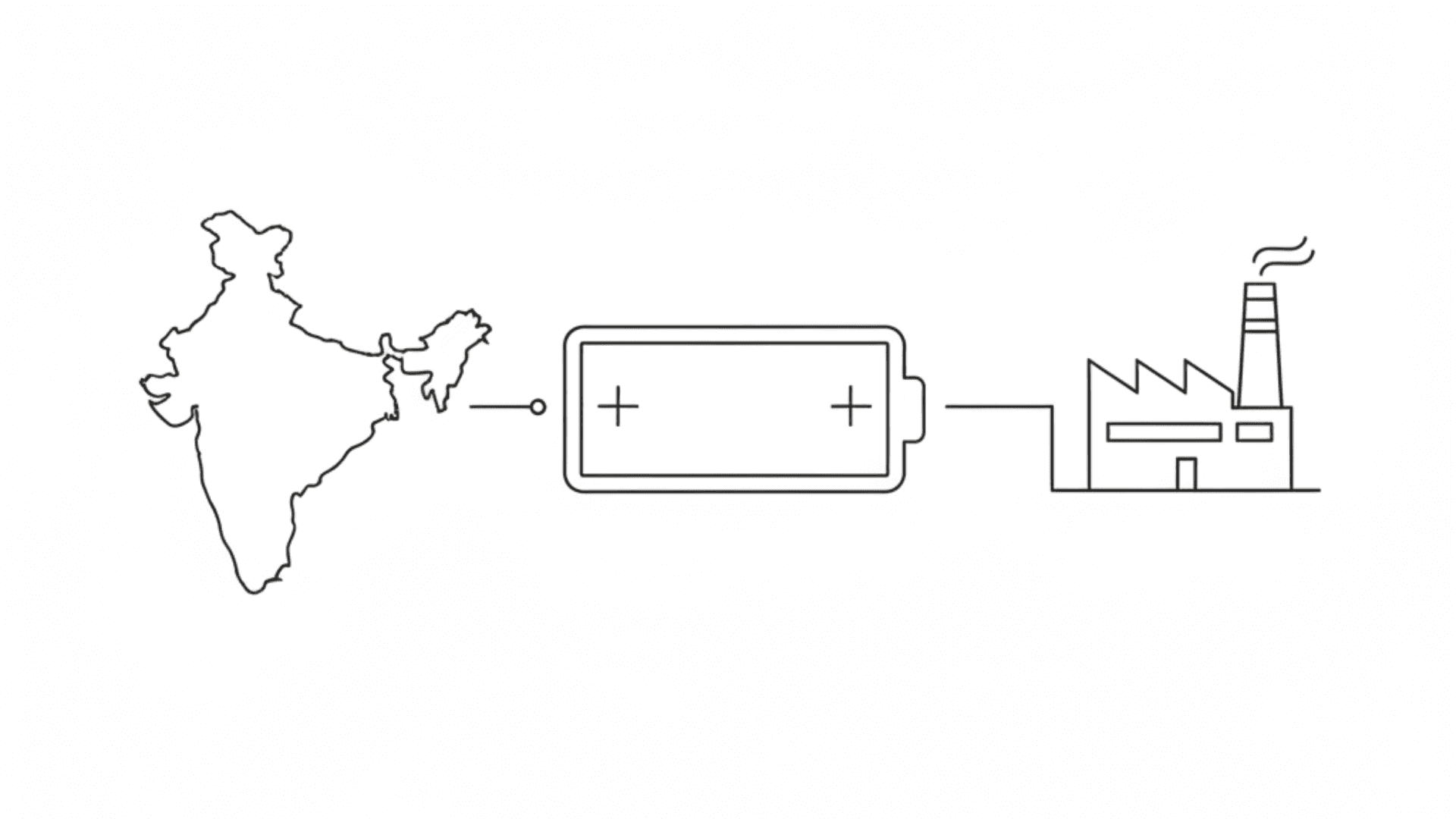
India has launched a special program to help companies make batteries in the country. This program is called the Production Linked Incentive Scheme, or PLI scheme for short. The government wants to help businesses that make batteries and reduce the need to buy batteries from other countries.
The battery industry is very important today. We need batteries for electric cars, storing energy from solar panels and wind turbines, and many other uses. Right now, India buys most of its batteries from other countries. The government wants to change this and help Indian companies make batteries here.
What is the PLI Scheme?
The PLI scheme is a government program that gives money to companies that make products in India. Think of it like a reward system. When companies make batteries and sell them, the government gives them extra money as a prize.
The government started this battery scheme in May 2021. They have set aside Rs. 18,100 crores (around 2.16 billion US dollars) for this program. This is a huge amount of money meant to help companies build factories and start making batteries.
The main goals of this scheme are simple. First, make more batteries in India instead of buying them from other countries. Second, create new jobs for people. Third, help the electric vehicle industry and renewable energy sector grow faster. Fourth, bring the latest battery technology to India.
Eligibility Criteria
Not everyone can apply for this scheme. The government has set some rules about who can join.
Any company can apply, whether it is Indian or from another country. Big companies and small companies can both apply. Even new companies or startups can try to get into this program. However, they must meet certain conditions.
The biggest requirement is money. Companies must invest at least Rs. 225 crores for every 1 GWh (gigawatt hour) of battery making capacity. This means if you want to make batteries, you need to spend a lot of money building the factory and buying machines.
Companies must also show they can make Advanced Chemistry Cell batteries, also called ACC batteries. These are special modern batteries used in electric vehicles and for storing energy. The company needs to prove it has the knowledge and technology to make these batteries.
The government also checks if the company can add value to the product in India. This means making the batteries better and using more Indian parts. In the first year, at least 25 percent of the battery value must come from work done in India. This percentage increases every year and reaches 60 percent by the fifth year.
Companies must also promise to make batteries within a certain time. They get two years to build their factory after signing the agreement. Then they must start making and selling batteries according to their targets.
Benefits for Businesses
The PLI scheme gives many benefits to companies that join the program.
The main benefit is money from the government. Companies get cash rewards based on how many batteries they make and sell. The government will give up to 20 percent of the battery sale price as incentive money. This extra money helps companies cover their costs and make profits faster.
Let us understand this with an example. If a company sells batteries worth Rs. 100 crores in a year, the government may give them up to Rs. 20 crores as incentive. This money comes every three months after the company shows proof of making and selling the batteries.
The scheme also helps companies in other ways. It makes India a better place to do business in the battery sector. Companies get support from the government in setting up their factories. They can also get help with land, power supply, and other basic needs.
Another big benefit is the growing market. India needs more and more batteries every year. Electric vehicles are becoming popular. People are installing solar panels on their homes and need batteries to store energy. Companies making batteries in India will have many customers.
The scheme also brings tax benefits in some cases. Companies making batteries may get special tax breaks or lower taxes on the machines they import. This depends on other government policies that work together with the PLI scheme.
Companies joining this program also gain trust. When customers know a company is part of the government scheme, they feel more confident buying from them. This helps in getting business deals and partnerships.
Application Process
Getting into the PLI scheme needs careful planning and many steps. Here is how companies can apply.
Check Eligibility
First, the company must check if it meets all the rules. Do you have enough money to invest? Can you make the right type of batteries? Do you have the technology and knowledge? Make sure you qualify before starting the application.
Prepare a Detailed Project Proposal
Next, make a detailed plan of your project. Write down how much money you will invest, what kind of batteries you will make, how many batteries you plan to produce, and when you will start production. Include information about your factory location, machines you will buy, and the technology you will use.
Gather Required Documents
Collect all the papers you need. This includes company registration documents, proof of financial strength like bank statements, technology agreements or patents, land documents if you already have land, and any other papers that show you can complete the project.
Register on the Government Portal
Go to the official PLI scheme website and create an account. Fill in basic information about your company. You will get a login ID and password to access the portal.
Submit Application Form
Fill out the application form carefully. Give correct information about your company, investment plans, and manufacturing targets. Upload all the required documents. Double check everything before submitting. Mistakes can delay your application or lead to rejection.
Application Review by Authorities
After you submit, government officials will review your application. They check if you meet all the requirements. They may ask for more information or documents. This review process can take several weeks or months.
The Ministry of Heavy Industries handles these applications. They have experts who evaluate each proposal based on technical capability, financial strength, and commitment to targets.
Receive Approval in Principle
If your application is good, you will get approval in principle. This means the government agrees to include you in the scheme. However, this is not the final approval yet. You still need to fulfill some conditions.
Sign the Incentive Agreement
Next, you must sign an agreement with the government. This agreement is like a contract. It states how much capacity you will build, when you will start production, what targets you must meet each year, and how much incentive money you can get.
Read this agreement very carefully before signing. Once signed, you must follow all the terms. If you do not meet the targets, you may lose the incentive money.
Commence Manufacturing & Meet Targets
Now comes the real work. Build your factory within two years. Install all the machines and equipment. Start making batteries. Make sure you produce the number of batteries mentioned in your agreement.
The scheme has a performance period of five years starting from January 1, 2025, to December 31, 2029. During these years, you must meet your yearly production targets to get the incentive money.
Claim Incentives
Every three months, submit proof of how many batteries you made and sold. The government will verify this information. Once approved, they will send the incentive money to your company bank account.
Keep good records of everything. Maintain proper accounts of production, sales, and the value you added in India. Government officials may inspect your factory and check your records anytime.
Impact on Indian Battery Industry
The PLI scheme is changing the battery industry in India in many positive ways.
First, it is boosting domestic manufacturing. Before this scheme, India made very few batteries and imported most of them from countries like China, Japan, and South Korea. Now, several companies are building large battery factories in India. This will make India less dependent on other countries for batteries.
Second, the scheme is creating thousands of new jobs. Battery factories need many workers, including engineers, technicians, supervisors, operators, and support staff. When factories open, they hire local people and give them training. This helps the economy and gives people good employment opportunities.
Third, the electric vehicle industry is growing faster because of this scheme. Electric cars, buses, scooters, and rickshaws all need batteries. When batteries are made in India, they become cheaper and more easily available. This encourages more people to buy electric vehicles, which is better for the environment.
Fourth, renewable energy projects are benefiting. Solar and wind energy farms need large batteries to store electricity. With more batteries available locally, building these projects becomes easier and less expensive. This helps India move toward cleaner energy.
The scheme is also bringing new technology to India. International companies are partnering with Indian firms to share knowledge and advanced battery technology. This makes Indian companies more skilled and competitive globally.
Finally, the scheme is building confidence in India as a manufacturing destination. When foreign companies see India supporting industries like battery making, they feel more willing to invest in the country. This brings more business and opportunities.
Challenges and Considerations
While the PLI scheme offers great benefits, companies must also understand the challenges.
Meeting targets is not easy. The scheme has strict production goals. If a company does not meet these targets, it loses the incentive money for that year. Building and running a battery factory on time requires good planning and management.
The investment requirement is very high. Not all companies can afford to invest Rs. 225 crores or more. Getting loans from banks for such large projects can also be difficult. Companies need to plan their finances carefully.
Technical challenges exist too. Making advanced batteries requires special knowledge and skills. Companies must have the right technology and trained workers. Finding and training skilled people takes time and effort.
Supply chain issues can cause problems. Battery making needs raw materials like lithium, cobalt, nickel, and graphite. India does not produce all these materials, so companies must import them. Price changes and supply problems in global markets can affect production.
Competition is increasing. As more companies join the PLI scheme, they will compete with each other for customers and resources. Companies must make good quality batteries at reasonable prices to survive in the market.
Compliance with rules is critical. Companies must maintain proper records, submit regular reports, and allow government inspections. Any mistake in documentation or failure to follow rules can lead to penalties or loss of benefits.
Environmental concerns must be addressed. Battery factories can produce waste and pollution if not managed properly. Companies must follow all environmental laws and use clean processes. This adds to costs and requires careful monitoring.
The waiting period for returns can be long. It takes two years to build the factory and then time to start making profits. Companies must have enough money to survive until they start receiving incentive payments.
Conclusion
India's PLI scheme for batteries is a powerful program that can change the future of battery manufacturing in the country. It offers significant financial incentives to companies willing to invest in making batteries locally.
For businesses, this is a golden opportunity. The government is supporting the industry with money, policies, and infrastructure help. The market for batteries is growing rapidly with electric vehicles and renewable energy becoming more popular. Companies that join this scheme now can build strong positions in the industry.
However, success requires commitment. Companies must invest large amounts of money, build factories on time, meet production targets, and maintain high quality standards. The journey is challenging but the rewards are worth the effort.
If you are a business owner or investor interested in the battery industry, study this scheme carefully. Understand all the requirements, benefits, and challenges. Prepare a solid business plan and gather the necessary resources. With the right approach, the PLI scheme can help your business grow and contribute to India's goal of becoming a global hub for battery manufacturing.
The scheme is not just about one company or one factory. It is about building an entire ecosystem where India can make batteries, create jobs, reduce imports, and support clean energy. By participating in this program, businesses become part of a larger mission to transform India's industrial landscape.
Frequently Asked Questions:
1. What is the maximum incentive under PLI?
The scheme offers up to 20 percent of the battery sale price as incentive, with the total program budget being Rs. 18,100 crores distributed over five years based on production and sales.
2. Can startups apply for the PLI scheme?
Yes, startups can apply if they meet the minimum investment requirement of Rs. 225 crores per GWh capacity and demonstrate technical capability to manufacture advanced chemistry cell batteries.
3. How long does approval take?
The approval process typically takes several weeks to a few months depending on the completeness of your application and the time needed for government review and verification.
4. Are foreign investors eligible?
Yes, both Indian and foreign companies can apply for the PLI scheme, and international partnerships or joint ventures are also welcome under the program.
5. Is land acquisition included in the criteria?
Companies must arrange their own land for the factory, but the investment in land and building infrastructure counts toward the minimum investment requirement of Rs. 225 crores per GWh.


