Introduction
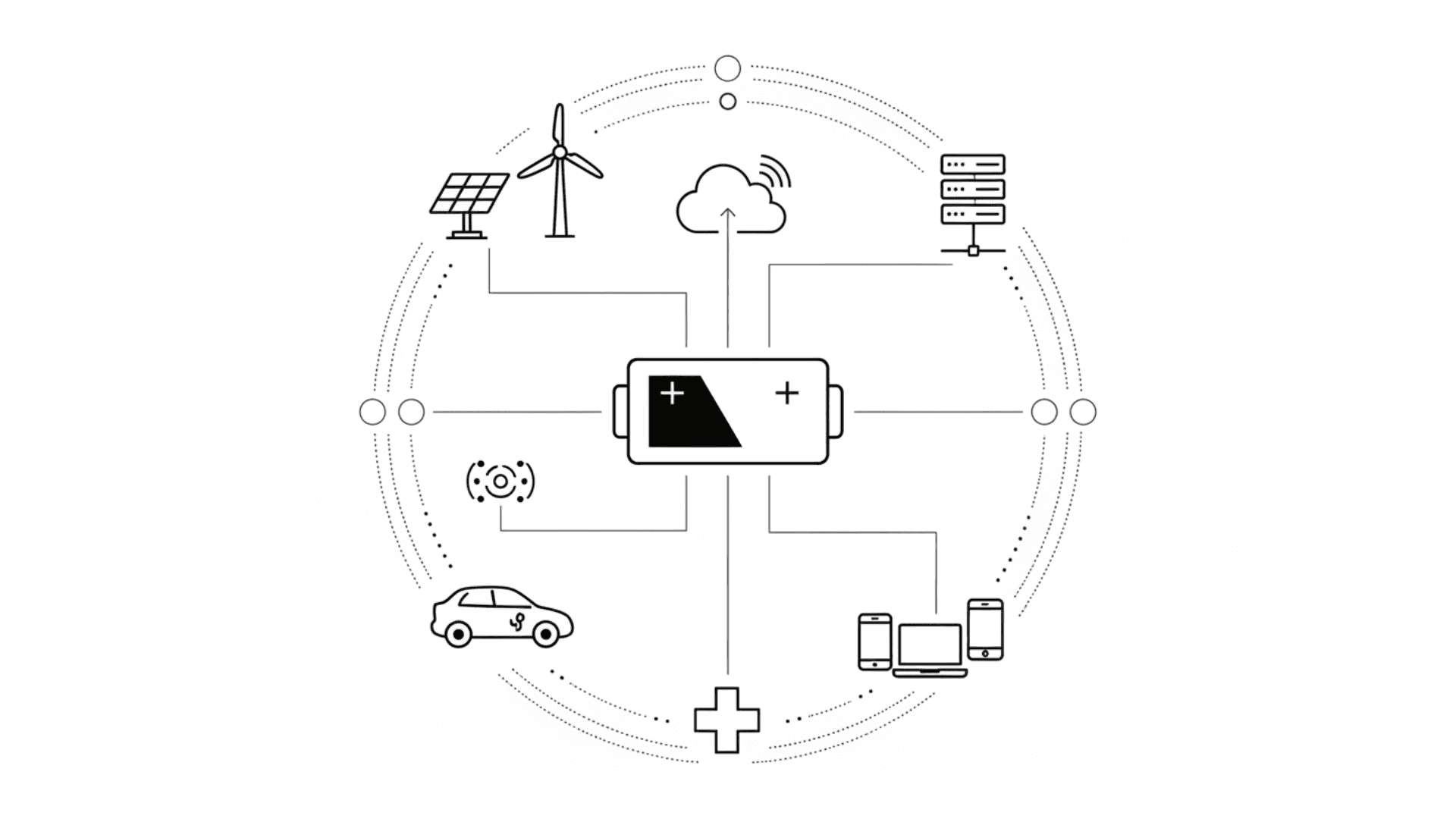
Think about how often you rely on batteries without realizing it. From the smartphone in your pocket to the backup generator at a hospital, batteries quietly keep our world running. They power our homes, our cars, our businesses, and even entire solar farms. Batteries have a limited lifespan. They wear down, lose efficiency, and sometimes fail at the worst possible moment. That is why monitoring them has become so important. In the past, battery monitoring meant someone checking voltages or inspecting equipment during routine visits. But in today’s connected world, that is not enough. Critical systems like data centers, hospitals, and renewable energy farms need more than occasional checkups. They need real-time visibility and smart insights. That is where the Internet of Things (IoT) steps in. By embedding connectivity and intelligence into batteries, IoT-enabled monitoring turns them from passive power sources into smart, self-reporting assets.
What is Battery Monitoring?
At its simplest, battery monitoring is about keeping track of a battery’s health. A battery monitoring system measures: Voltage, which indicates how much electrical “push” is available. Current, or how much power is flowing in or out. Temperature, to see whether the battery is running cool or heating up dangerously. Charge level, showing how full or empty the battery is, In the old days, this was a manual process. A technician would come by with tools, check a few readings, and move on. That worked fine for smaller systems, but it left room for big surprises. A failing battery could stay hidden until it caused major downtime or damage. Today, monitoring is smarter, faster, and continuous. Modern systems collect and analyze data around the clock, giving operators a complete picture of battery performance. Instead of reacting when something breaks, they can prevent issues before they ever happen.
Why Battery Monitoring Matters
Batteries rarely draw attention until they malfunction, but their failure can cause significant and costly issues. In hospitals, battery backups protect critical life-saving equipment. If those fail, the stakes could not be higher In data centers, a few minutes of downtime can cost thousands of dollars per minute. Many outages trace back to battery failures. For renewable energy systems, poorly managed batteries mean wasted energy and reduced efficiency. In electric vehicles, poor charging habits or unnoticed wear can cut years off battery life, reducing value. Batteries are the invisible backbone of modern infrastructure. Monitoring ensures they are always ready when needed, reduces risks, extends lifespan, and saves organizations from costly surprises.
Role of IoT in Energy Storage
The Internet of Things connects physical devices, such as sensors, machines, or equipment, to digital systems that can analyze and act on data. When applied to batteries, it transforms them from silent power sources into intelligent, connected assets. Sensors measure battery health factors like voltage, current, and temperature. Communication layer transmits this data over Wi-Fi, cellular networks, or IoT-specific protocols such as LoRaWAN (Long Range Wide Area Network). Analytics platform in the cloud or local servers analyzes the data, generates insights, and sends alerts or recommendations.
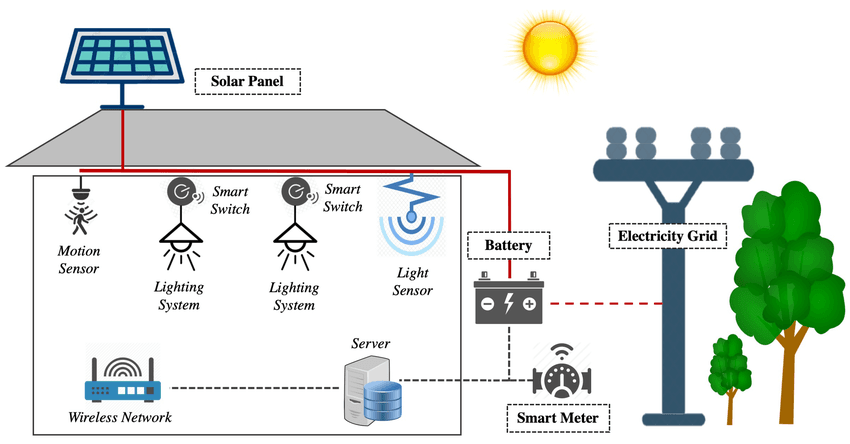
Source: The concept of IoT enabled building energy management system
Instead of waiting for a failure, operators can see problems developing in real time. A telecom company, for example, can monitor batteries at thousands of cell towers without sending technicians to each site. A solar farm operator can track performance across hundreds of modules, spotting weak batteries before they affect the system. IoT shifts energy storage management from reactive problem-solving to proactive optimization, and that is a game-changer.
What Is IoT-Enabled Battery Monitoring?
IoT-enabled battery monitoring takes standard battery monitoring and adds intelligent, connected features. It combines smart sensors, reliable connectivity, and intelligent analytics into one integrated system. Here is the big picture: Definition: These systems gather data from batteries in real time, transmit it securely, and analyze it to provide actionable insights Core concept: The system does not just record data; it continuously learns patterns, predicts potential issues, and even recommends or automates fixes
Key Features of IoT Battery Monitoring Systems
Real-Time Data Collection With IoT, monitoring happens every second rather than occasionally. This allows operators to catch subtle issues early, like a small voltage dip that could later cause failure. Remote Accessibility Geography no longer matters. A manager in London can monitor a solar farm in California from a laptop. That means fewer site visits, lower costs, and faster response times. Predictive Maintenance Alerts By analyzing historical trends, IoT systems predict when something is likely to fail. For example, if resistance inside a cell is slowly increasing, the system can alert operators before the battery fails completely. Energy Efficiency Optimization IoT systems do more than monitor; they also optimize. They can adjust charging cycles, balance loads, or time charging to take advantage of lower electricity rates. This not only saves money but also extends battery life.
Benefits for Energy Storage Systems
Adopting IoT-enabled monitoring brings clear and measurable benefits. Improved Reliability Operators gain complete visibility into system health, which reduces the risk of unexpected failures. Backup power systems are always ready, not only during annual tests. Extended Battery Life IoT helps prevent harmful conditions like overcharging, overheating, or deep discharging. Many organizations report a 20–30% increase in battery lifespan after implementing IoT monitoring. Cost Savings in Operations From fewer emergency repairs to optimized energy use, savings add up quickly. Most companies recover their investment within 18 to 24 months. Better Energy Utilization Smart insights let organizations align usage with energy markets, renewable generation, and peak demand cycles, which means more efficient and cost-effective energy use. Applications Across Industries IoT-enabled battery monitoring serves many industries, each benefiting in unique ways. Renewable Energy Solar and wind farms rely on batteries to store fluctuating energy. IoT monitoring ensures maximum efficiency and uptime. Homeowners can track their storage and maximize savings, while large-scale operators can spot underperforming modules early. Electric Vehicles EVs depend on healthy batteries. IoT monitoring improves charging cycles, extends lifespan, and gives fleet operators real-time insights into hundreds of vehicles. Charging networks also use IoT to manage grid loads effectively. Telecom and Data Centers These industries demand near-perfect uptime. IoT ensures backup batteries are always ready, reducing the risk of service disruptions. Industrial Storage From forklifts in warehouses to backup systems in factories, IoT ensures smooth operations. Critical sectors like pharmaceuticals and semiconductors use IoT to protect sensitive environments.
Challenges and Considerations
Data Security and Privacy Connected IoT systems are prime targets for cyberattacks, making robust security crucial. Encryption, multi-factor authentication, and regular security audits help protect sensitive data. For example, in 2019, a vulnerability in smart grid sensors in the U.S. exposed critical energy infrastructure, showing that battery monitoring systems must be hardened against external threats. In industrial applications, companies like Siemens implement end-to-end encryption and device authentication to safeguard energy storage and battery performance data. Scalability As IoT networks grow, managing thousands of sensors and streaming massive volumes of data becomes complex. Cloud computing platforms like AWS IoT and Microsoft Azure IoT provide scalable infrastructure to handle this load. Tesla’s fleet of electric vehicles collects real-time battery performance data from millions of cars globally, requiring robust cloud solutions to process, analyze, and provide actionable insights. Scalability also means ensuring latency is low enough for real-time monitoring, especially in safety-critical applications like drones or medical devices.
Cost of Implementation
Initial investment in sensors, communication modules, gateways, and integration software can be significant. However, these costs are offset by operational savings and efficiency gains. DHL implemented IoT-enabled battery monitoring in warehouse robots, which reduced unexpected downtime and maintenance costs, showing that predictive insights pay off over time. Similarly, electric vehicle manufacturers invest in battery telemetry systems to extend the life of high-value battery packs, saving millions in warranty and replacement costs.
Battery Lifecycle Optimization
IoT-enabled monitoring allows predictive maintenance and optimal charge/discharge cycles, prolonging battery life and performance. Airbus uses IoT sensors to monitor aircraft batteries, identifying early signs of degradation and preventing in-flight failures. In renewable energy storage, companies like Sonnen analyze battery health remotely to optimize energy output and reduce replacement frequency, improving ROI on solar-plus-storage systems.
Regulatory Compliance
Battery tracking through IoT ensures adherence to safety and environmental regulations. European battery manufacturers like VARTA and Northvolt employ IoT-enabled monitoring to comply with recycling, disposal, and transportation laws. Real-time reporting capabilities help companies meet strict legal requirements and avoid costly penalties while promoting sustainability.
Remote Maintenance and Predictive Analytics
IoT enables predictive maintenance, reducing the need for manual inspections and minimizing downtime. In China, electric bus fleets use battery telemetry to schedule maintenance proactively, ensuring continuous operation and reducing operational disruptions. Predictive analytics also helps identify underperforming batteries early, avoiding catastrophic failures in industrial equipment or critical transportation systems.
Energy Efficiency and Cost Savings
By continuously monitoring energy usage and battery health, companies can improve energy efficiency. Amazon uses IoT sensors in its fulfillment centers to optimize battery usage in automated guided vehicles (AGVs), reducing energy consumption and extending battery life. Similarly, smart grid operators can balance load and prevent overcharging of energy storage units, lowering electricity costs and extending system longevity.
Future of Connected Energy Storage
Looking ahead, IoT-enabled battery monitoring will continue to become smarter and more autonomous. AI and machine learning will predict failures more accurately. Smart grid integration will make batteries part of broader energy ecosystems, including vehicle-to-grid systems. Standardization will reduce costs and improve compatibility between vendors. Edge computing will process data locally for faster and more private insights. Sustainability efforts will use IoT to support battery recycling and second-life use. The future is one where batteries are not just storage devices, but active, intelligent players in our energy networks.
Conclusion
IoT-enabled battery monitoring is more than a technical upgrade. It represents a shift in how organizations approach energy storage. Instead of treating batteries as “install and forget” assets, operators can now manage them like living systems, with constant feedback and proactive care. The benefits are clear: better reliability, longer lifespan, lower costs, and smarter energy use. While challenges like cost and security exist, innovation is solving these problems quickly. For businesses, the question is no longer if they should adopt IoT battery monitoring, but how soon. In a world where energy reliability and efficiency are competitive advantages, smart battery management is essential.
Frequently Asked Questions:
1. What types of batteries support IoT monitoring?
Most modern battery types, including lithium-ion, lead-acid, nickel-based, and emerging solid-state batteries, can be equipped with IoT monitoring.
2. How secure is IoT-based battery data?
With strong encryption, authentication, and regular updates, IoT battery systems are highly secure when implemented correctly.
3. Can IoT monitoring reduce energy waste?
Yes. Organizations often report 10–15% reductions in energy consumption due to optimized charging cycles and smarter usage.
4. Do IoT systems work with solar storage?
Absolutely. Solar-plus-storage is one of the most common use cases, both for homes and utility-scale projects.
5. How expensive is IoT battery monitoring implementation?
Costs vary by scale, but most companies achieve payback within 18–24 months due to operational savings and extended battery life.
6. Can IoT help with electric vehicle charging?
Yes. It optimizes charging sessions, balances loads, and prevents grid strain during peak times.


